
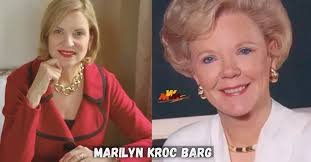
Marilyn Janet Lynn Kroc Barg may not be a name that jumps off the marquee, but in many ways, she helped shape more than just a global fast-food empire. As the only child of McDonald’s pioneer Ray Kroc, her life bridged business, philanthropy, and personal passion — and left a quiet, enduring legacy.
Early Life and Family Roots
Born on October 15, 1924, in Chicago, Illinois, Marilyn grew up in a modest household. Her parents were Ray Kroc and his first wife, Ethel Janet Fleming. While her father would later transform McDonald’s into a global brand, Marilyn’s childhood was grounded in more ordinary Midwestern values.
Despite her father’s eventual fortune, Marilyn preferred to keep a low profile. She attended local schools in Chicago and was raised with a strong sense of personal integrity and independence.
Passion for Horses: A Life Beyond Golden Arches
One of Marilyn’s most enduring passions was the equestrian world. She loved horses deeply — breeding them, showing them, and competing in equestrian events.
She focused on breeds like Arabian horses and American Saddlebreds, embracing both the discipline and freedom that came with equine life. This dedication to horses offered her a sense of identity that stood apart from the McDonald’s legacy.
Personal Life and Marriages
Marilyn’s personal life was relatively private, but some details are known. In 1949, she married Sylvester Nordly Nelson, a World War II veteran.
In 1960, she married Walter James Barg, an administrator who shared her commitment to charitable work. The two remained married until her death, and together they supported a number of community causes.
Role at McDonald’s
While Marilyn was not the public face of McDonald’s, she had a seat at the table — literally. She served on the board of the company, helping guide its direction behind the scenes.
Her involvement, though low-key, reflected a commitment to her family’s enterprise and to the social responsibilities that came with their success.
Philanthropy: A Heart for Service
Marilyn’s true legacy may lie in her philanthropic work. She was deeply invested in causes that resonated personally, particularly those connected to health, children, and community support.
Championing Families Through Ronald McDonald House
One of her most notable contributions was her role in the development of what would become Ronald McDonald House Charities (RMHC). While the first Ronald McDonald House officially opened after her death, Marilyn’s early charitable work and advocacy set the groundwork.
Her support for families dealing with serious illness underscored her belief in compassion and practical help — giving not just money, but hope and shelter when it was needed most.
Health Advocacy and Diabetes Research
Marilyn lived with diabetes, and this personal struggle deeply informed her philanthropic commitments. She directed resources toward medical research, especially projects aimed at advancing the treatment and understanding of diabetes.
Her giving was not flashy — she often made donations quietly, preferring anonymity and practical support over public recognition.
Broader Charitable Engagements
Beyond RMHC, Marilyn supported organizations such as the Salvation Army, educational institutions, and community projects. She believed in creating lasting impact, not just one-off gestures, and picked causes where she felt her contributions could make a real, measurable difference.
Political Engagement
Marilyn didn’t shy away from politics either. She hosted fundraisers for significant political figures, including Richard Nixon and Ronald Reagan, using her influence to support leaders she believed could advance causes she cared about.
Her political involvement was another extension of her philanthropic strategy: not just giving, but building relationships that could help amplify her impact.
Challenges and Private Struggles
Despite her wealth and influence, Marilyn’s life was not free from hardship. Her long battle with diabetes eventually took a toll. On September 11, 1973, she passed away at only 48 years old, as a result of diabetes complications.
Her death was quiet and private, in keeping with the way she lived her life. Her funeral was modest, reflecting her humility and preference for keeping her personal matters out of the limelight.
Legacy: A Quiet but Powerful Influence
Marilyn Kroc Barg’s legacy is not marked by flashy headlines, but by consistent, thoughtful philanthropy and a deep sense of purpose.
- Philanthropic Roots: Though she died before the formal founding of Ronald McDonald House Charities, her vision and early contributions helped lay the groundwork for what RMHC would become.
- Thoughtful Giving: Unlike high-profile philanthropists with large staffs and foundations, Marilyn gave directly, often anonymously, and chose causes with lasting impact.
- Equestrian Passion: Her love for horses wasn’t just a hobby — it was a defining part of her identity, representing her independence, discipline, and grace.
- Model of Private Wealth: In contrast to many children of billionaires, Marilyn didn’t flaunt her fortune. She used it to serve others, not to build a personal brand.
Reflection: Why Marilyn Matters Today
In an age of celebrity philanthropy and high-visibility giving, Marilyn Kroc Barg’s life offers a quiet counterpoint. Her story reminds us that legacy isn’t always about outward success or public acclaim — it’s often about how you choose to give, serve, and remain true to your values.
She helped bring to life charities that continue to support families in need. She invested in research to fight illness she knew personally. She pursued her passions unabashedly, whether in the boardroom or the stable. And she did all of this with a humility that seems increasingly rare.
Marilyn’s journey encourages us to think about wealth not just as a means to comfort, but as a tool for meaningful change. Her example suggests that the most enduring influence often comes not from wealth alone, but from generosity with purpose.
