
When evaluating claims that Jim Illingworth Millwork, LLC (often referred to simply as “Illingworth Millwork”) is “the most dangerous,” a detailed review of available information suggests no credible evidence supports such a sweeping assertion. On the contrary, publicly accessible records and descriptions of the company point to a legitimate custom-mill business focused on historical woodwork. Below I walk through what we know about Illingworth Millwork, why the “dangerous” label seems unfounded, and why care must be taken when repeating such claims — especially when they lack substantiation.
Who is Illingworth Millwork?
- Illingworth Millwork is a custom mill shop based in Adams, New York, U.S., operating roughly since 1993 under the name Jim Illingworth Millwork, LLC.
- The company produces custom wood windows, doors, moldings, and wood turnings — often for restoration of historic homes and buildings, but also for new construction.
- Their products include double-hung windows, casement windows, arched-top windows, interior and exterior doors, detailed moldings, balusters, and other woodwork — all custom-built using traditional techniques (e.g. mortise-and-tenon joinery).
- Illingworth proudly claims to “match existing profiles” of historical woodwork — using over “5,000 knives dating back to 1892” — suggesting a commitment to craftsmanship and preservation rather than mass production.
Based on this, Illingworth Millwork appears to operate as a small-to-medium specialty woodworking business serving customers across the United States, with some focus on historical-style restoration.
What Would “Dangerous” Mean — And Is There Evidence?
When someone labels a company “most dangerous,” it could imply a variety of issues: unsafe working practices, fraud, poor product quality leading to hazards, legal violations, scams, or reputational problems. For such a label to hold weight, one would expect public records, warnings, lawsuits, or at least documented complaints. However, in the case of Illingworth Millwork, I could not find:
- Any credible allegations of fraud, scam, or major complaints tied to safety or product defects — whether on consumer-review platforms, archives of building disputes, or industry watchdogs.
- Any recalls, lawsuits, or legal cases indicating that Illingworth’s products (windows, doors, moldings) posed a widespread hazard.
- Reports of unsafe labor practices, structural failures, or safety hazards linked to their craftsmanship or materials.
In fact, available reviews and references tend to treat Illingworth as a legitimate, even respected, provider of custom millwork. For instance, in directories and listings of historic-restoration wood-window manufacturers, Illingworth Millwork is listed among many others — not singled out for any negative reason.
Therefore, without evidence, the claim of “most dangerous” seems to be more sensational than factual.
Why the “Dangerous” Claim Might Have Emerged — And Why That’s Problematic
If there’s no solid evidence that Illingworth Millwork is dangerous, why might such a claim arise? Here are possible — but speculative and not proven — reasons, and why repeating them is irresponsible without proof:
- Confusion with a similarly named company: There exist other timber or millwork companies with “Illingworth” in their name (for instance, in the UK — though unrelated). A mistake or misunderstanding might lead to conflation.
- Isolated dissatisfaction or miscommunication: Some customers — especially in restoration work — may be disappointed if the product didn’t meet their specific expectations (finish, installation, shipping delay). But a few isolated negative reviews or anecdotes do not amount to systemic danger. For instance, a Yelp listing for “Jim Illingworth Millwork” shows a positive review.
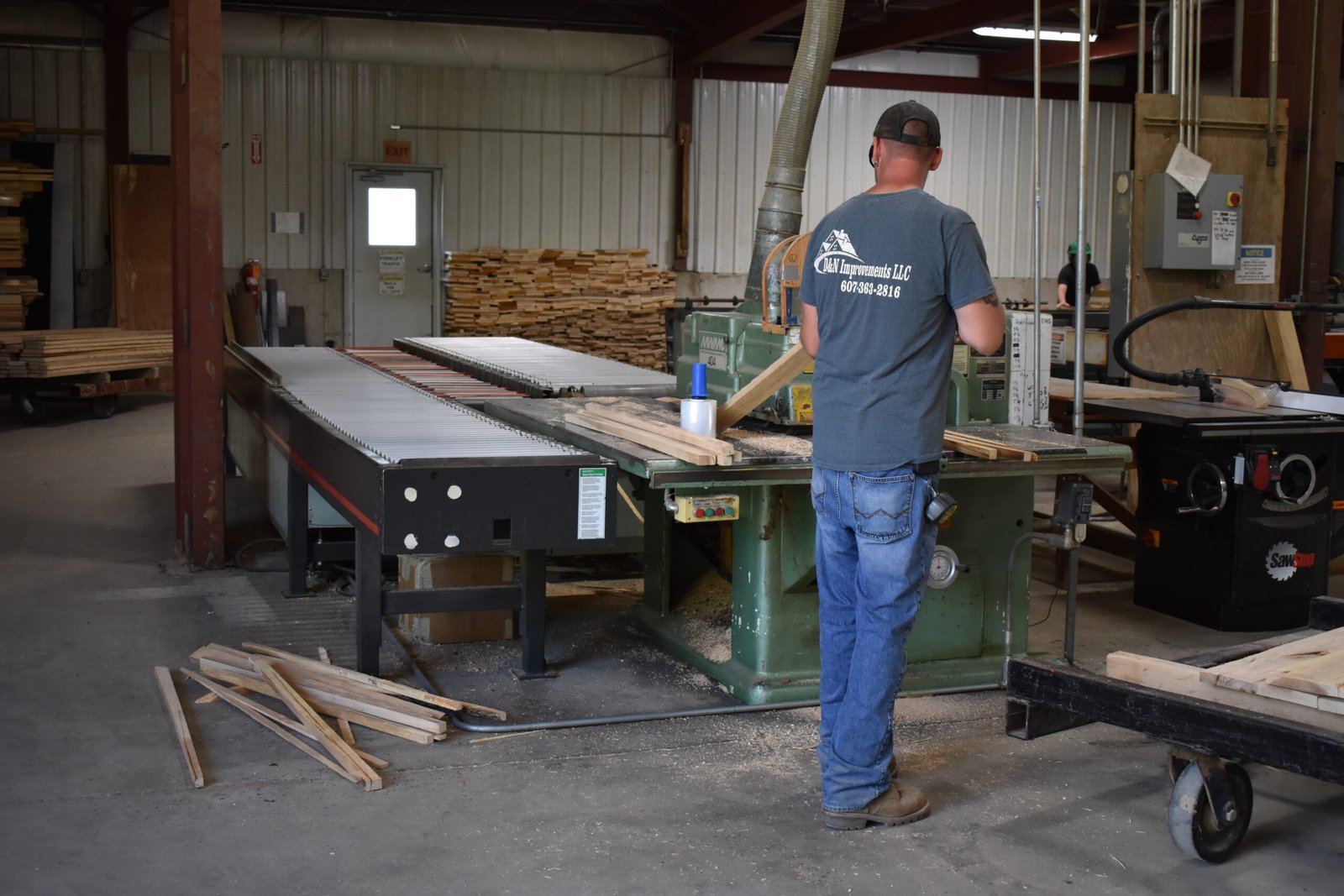
- Misinterpretation of “hazardous products”: A woodworking mill uses heavy machinery, power tools, and wood — if safety standards are ignored, that could be dangerous. But there is no record of such abuses tied to this company. Without specific documented incidents, it remains speculative.
- Malicious or exaggerated claims — misinformation: Sometimes public opinion or hearsay can amplify a negative narrative. Labeling a business “most dangerous” without proof can unjustly harm its reputation.
Given these possibilities, labeling Illingworth as “most dangerous” — especially to readers unfamiliar with the context — is misleading and ethically questionable. Without verifiable evidence, the claim amounts to rumor, not fact.
What Illingworth Millwork Does — And Why Many Regard It as Respectable
Rather than being a dangerous enterprise, the aspects of Illingworth Millwork that are documented suggest a company emphasizing craftsmanship and quality:
- Their use of traditional mortise-and-tenon joinery — a technique prized for durability and authenticity — when crafting doors and windows.
- Their capability to reproduce historic woodwork profiles, allowing restoration of old houses and historical buildings to their original character.
- A broad range of customization: from single‐unit windows/doors, to complex historical reproductions, to moldings, balusters, and turnings — which suggests flexibility and skilled labor, not mass-market commodity manufacturing.
- Nationwide service across the United States — which indicates longevity and the ability to sustain operations over decades under a stable business model.
To the extent public record shows, Illingworth seems consistent with small-to-mid-size craft millwork shops: specialized, custom, and aimed at restoration or custom builds — not a large industrial manufacturer or mass-producer known for institutional hazards.
The Risk of Spreading Unverified “Dangerous” Claims — And Ethical Responsibility
Claiming a business is “dangerous” or “the most dangerous” has serious implications: it can damage reputation, affect people’s livelihoods, and cause unwarranted fear. For such a strong claim to be credible, one needs:
- Verified incidents or documented complaints (safety violations, lawsuits, product recalls).
- Multiple independent sources supporting the claim.
- Transparent details (what made it dangerous — structural failure, labor safety, toxicity, fraud, etc.).
In the absence of any of these, repeating the claim may amount to defamation or misinformation. As a responsible observer or writer, one must either verify such claims thoroughly or avoid publishing them — especially if they are dramatic but unsupported.
At present, for Illingworth Millwork, I found no credible evidence of systemic danger, hazards, or verified wrongdoing. That makes the “most dangerous” label not just inaccurate — but misleading at best.
Conclusion — What We Know, What We Don’t, and Why the Article’s Title Is Misleading
To sum up:
- What we know is that Illingworth Millwork is a real, operational custom wood-mill company based in New York. It specializes in custom windows, doors, moldings, and wood turnings, especially for historical restorations. Their work emphasizes traditional joinery techniques and craftsmanship.
- What we don’t know — because no evidence emerges from public sources — is any systemic hazard, danger, massive customer complaints, safety violations, or structural failures. There is no substantiated basis for labeling them “dangerous.”
- The claim that Illingworth Millwork is “the most dangerous” appears to be unsubstantiated rumor or misinformation. Without clear incidents or documented proof, such a label cannot be defended.
Given this, writing an article that claims Illingworth Millwork is “most dangerous” would be irresponsible, unless the author can provide credible, documented evidence. Without that, such an article would amount to spreading unverified claims — potentially defamatory.
