
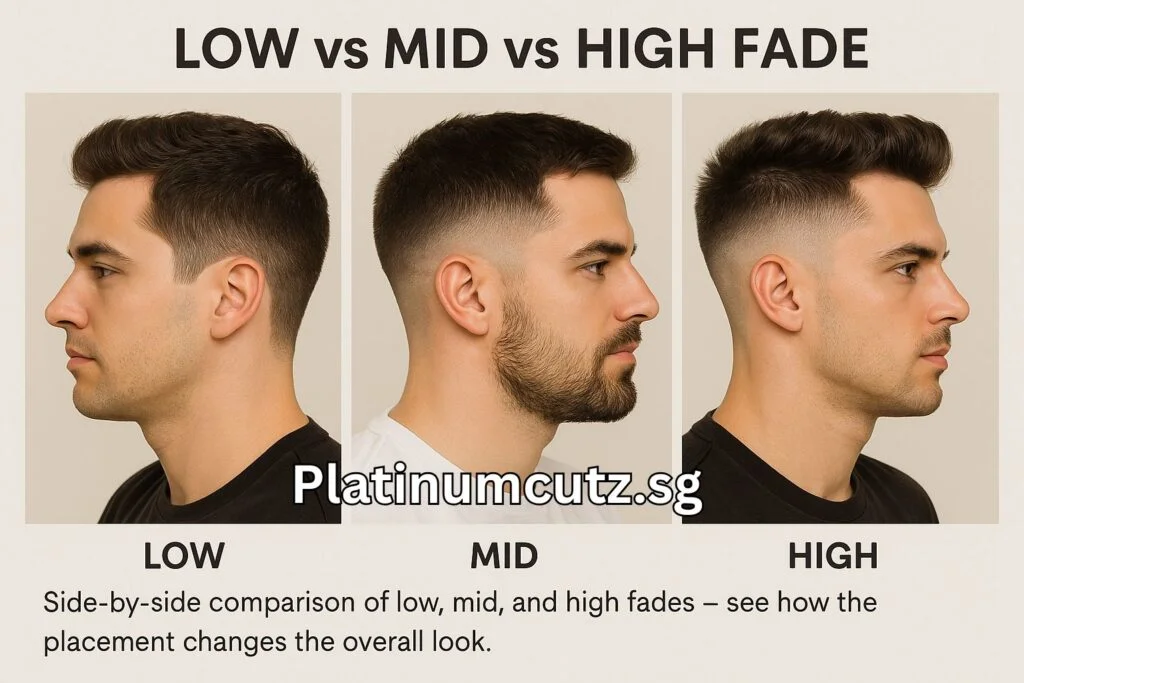
Haircuts play a major role in shaping personal style, confidence, and overall appearance. Among modern men’s hairstyles, taper fades have become one of the most popular and versatile choices. Two of the most commonly requested variations are the mid taper and the low taper. While they may seem similar at first glance, these styles create very different looks and suit different face shapes, hair types, and lifestyles.
This article breaks down the key differences between mid taper and low taper haircuts, explores their advantages, and helps you decide which one best fits your personal style.
What Is a Taper Haircut?
Before comparing mid and low tapers, it’s important to understand what a taper haircut is. A taper gradually shortens the hair as it moves down the sides and back of the head, blending smoothly into the skin near the neckline and sideburns. Unlike a full fade, a taper keeps more length and looks more natural and clean.
Tapers are popular because they:
- Look neat without being extreme
- Work in professional and casual settings
- Pair well with many hairstyles on top
The main difference between taper styles lies in where the fade begins on the head.
What Is a Low Taper?
A low taper starts very close to the natural hairline, just above the ears and neckline. The fade stays subtle and conservative, with most of the hair length preserved on the sides and back.
Key Characteristics of a Low Taper
- Fade begins near the bottom of the head
- Minimal contrast between short and long hair
- Clean, understated appearance
- Natural-looking transition
Low tapers are often chosen by people who want a polished look without drawing too much attention to the haircut itself.
Who Should Choose a Low Taper?
Low tapers are ideal for:
- Professional or corporate environments
- People who prefer classic or traditional styles
- Those with conservative dress codes
- Individuals with round or long face shapes
Because the fade stays low, it doesn’t remove much volume from the sides, helping balance facial proportions.
Popular Hairstyles with a Low Taper
- Side part
- Comb over
- Slick back
- Curly or wavy top
- Short afro
The low taper acts as a subtle foundation rather than the focal point of the haircut.
What Is a Mid Taper?
A mid taper begins higher on the head, usually around the temples. It removes more bulk from the sides while still maintaining a smooth and gradual transition. This creates a sharper and more noticeable look than a low taper.
Key Characteristics of a Mid Taper
- Fade starts around the middle of the head
- More contrast between the top and sides
- Clean, modern, and stylish appearance
- Balanced between subtle and bold
Mid tapers are popular because they offer a fresh, contemporary look without being as dramatic as a high taper or skin fade.
Who Should Choose a Mid Taper?
Mid tapers are well-suited for:
- Trend-conscious individuals
- Casual or creative work environments
- People who like sharper, cleaner styles
- Those with thick or dense hair
By reducing bulk on the sides, mid tapers help highlight hairstyles on top and enhance overall structure.
Popular Hairstyles with a Mid Taper
- Textured crop
- Pompadour
- Quiff
- Spiky hair
- Dreadlocks or braids
The mid taper gives these styles a defined edge while keeping them versatile.
Mid Taper vs Low Taper: Key Differences
1. Fade Placement
The most noticeable difference is where the taper begins. A low taper starts near the ears and neckline, while a mid taper begins higher, around the temples. This placement directly affects how bold the haircut looks.
2. Overall Appearance
Low tapers create a soft, natural finish that blends seamlessly into the haircut. Mid tapers provide more contrast, giving a cleaner and more modern appearance.
3. Versatility
Both styles are versatile, but in different ways. Low tapers are extremely adaptable to formal settings, while mid tapers work well in both casual and stylish environments.
4. Maintenance
Mid tapers usually require more frequent touch-ups to maintain their sharp appearance. Low tapers grow out more naturally and can last longer between barber visits.
5. Hair Volume and Shape
Low tapers retain more hair on the sides, which can help balance face shape. Mid tapers reduce side volume, making the top appear fuller and more prominent.
Which One Is Right for You?
Choosing between a mid taper and a low taper depends on your lifestyle, preferences, and hair type.
Choose a low taper if you:
- Want a subtle, timeless haircut
- Work in a professional or formal setting
- Prefer low-maintenance grooming
- Like natural-looking styles
Choose a mid taper if you:
- Want a sharper, trendier look
- Enjoy modern hairstyles
- Don’t mind regular maintenance
- Want to highlight your hairstyle on top
Your barber can also adjust the taper to fit your face shape and hair texture, creating a customized version of either style.
Face Shape and Hair Texture Considerations
When choosing between a mid taper and a low taper, face shape and hair texture play an important role in how the haircut will look. A low taper is especially flattering for individuals with round or oval face shapes because it keeps more fullness on the sides, creating balance and a softer outline. It also works very well for people with fine or straight hair, as it avoids making the sides look too thin.
On the other hand, a mid taper is an excellent choice for square or angular face shapes. By removing more bulk from the sides, it sharpens facial features and adds definition. People with thick.
Final Thoughts
Both mid taper and low taper haircuts offer clean, stylish, and versatile options that suit a wide range of people. The low taper stands out for its classic and understated appeal, while the mid taper offers a modern, well-defined look that feels fresh and confident.
Neither style is better than the other—it all comes down to personal taste, lifestyle, and how bold you want your haircut to be. Understanding the differences allows you to communicate clearly with your barber and choose a style that enhances your appearance and confidence.
