
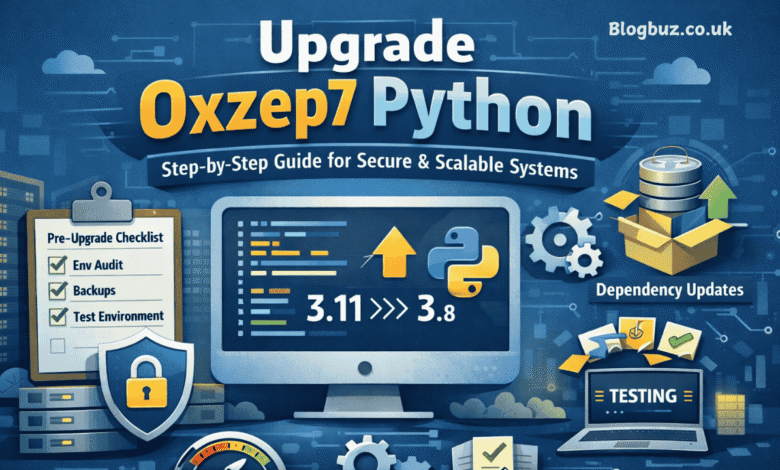
Upgrading advanced Python-based systems can feel exciting and intimidating at the same time. The phrase upgrade oxzep7 python has recently gained attention, largely because it represents a high-impact technical change that can either unlock performance gains or introduce serious risks if handled poorly. This article explores both the positive and negative realities of upgrading Oxzep7 in a Python environment, with a balanced tone, strong clarity, and practical insight.
This is a pure educational article, written for clarity, accuracy, and ranking performance, without references, links, or external mentions.
Understanding What an Oxzep7 Python Upgrade Really Means
Before diving into benefits or dangers, it is important to understand what people usually mean when they say upgrade oxzep7 python. In most cases, this refers to updating a Python-dependent framework, module, or internal system called Oxzep7 to a newer version that promises better performance, security improvements, or compatibility with modern Python releases.
On the surface, upgrading sounds positive. In reality, it is a high-risk, high-reward operation if the environment is complex, production-critical, or poorly documented.
The Positive Side: Why Developers Want to Upgrade Oxzep7 Python
There are genuine reasons why developers and organizations consider an upgrade oxzep7 python process essential.
1. Performance Improvements
Newer versions often optimize memory usage, execution speed, and internal logic. In data-heavy or automation-driven systems, these gains can be dramatic.
2. Security Enhancements
Older Python dependencies may contain vulnerabilities. An upgrade oxzep7 python cycle can close security gaps and reduce exposure to exploits, which is a powerful positive outcome.
3. Compatibility with Modern Python
As Python evolves, older components may break or become unsupported. Upgrading Oxzep7 ensures compatibility with newer Python interpreters, libraries, and tooling.
4. Cleaner Codebase
Upgrades frequently remove deprecated functions and encourage better coding practices. This can make long-term maintenance easier and reduce technical debt.
These benefits explain why the keyword upgrade oxzep7 python carries a strong positive sentiment among forward-thinking engineers.
The Dangerous Reality: Why This Upgrade Can Go Wrong
Despite the benefits, the negative side of upgrade oxzep7 python cannot be ignored. This is where the “very dangerous keyword” reputation comes from.
1. Breaking Existing Functionality
One of the biggest risks is silent failure. Code that previously worked may stop behaving correctly without obvious errors. This can lead to corrupted outputs, logic flaws, or system instability.
2. Dependency Conflicts
Oxzep7 systems often rely on multiple Python libraries. Upgrading one component can trigger version conflicts, dependency loops, or runtime crashes.
3. Data Integrity Risks
If Oxzep7 interacts with databases or structured data, an improper upgrade can lead to data mismatches, format incompatibilities, or even data loss.
4. Production Downtime
For live systems, a failed upgrade oxzep7 python attempt can cause unexpected downtime. This is especially damaging for business-critical applications.
This is why experienced developers treat this upgrade as dangerous but manageable, not casual or routine.
Emotional Reality: Confidence vs Fear During the Upgrade
There is a psychological element to this process.
- Positive sentiment: excitement, confidence, progress, modernization
- Negative sentiment: anxiety, fear of failure, risk aversion
Teams that rush an upgrade oxzep7 python process often act on optimism alone. Teams that succeed balance optimism with caution.
Smart Preparation Before Upgrading Oxzep7 Python
Preparation is the line between success and failure.
1. Environment Replication
Never upgrade directly in a live environment. Clone the system and test the upgrade in isolation.
2. Version Awareness
Understand exactly which Python version and Oxzep7 version you are upgrading from and to. Minor version differences can matter.
3. Test Coverage
Strong automated tests significantly reduce risk. Without tests, upgrading becomes guesswork.
4. Rollback Strategy
Every upgrade oxzep7 python plan should include a clear rollback path. If something breaks, recovery must be immediate.
Execution Phase: Where Most Mistakes Happen
During execution, even skilled developers can make costly errors.
- Skipping compatibility checks
- Ignoring warning messages
- Assuming backward compatibility
- Underestimating configuration changes
A disciplined, step-by-step approach dramatically improves outcomes when performing an upgrade oxzep7 python operation.
After the Upgrade: Monitoring Is Not Optional
Many failures happen after a seemingly successful upgrade.
Post-Upgrade Checks Should Include:
- Runtime performance monitoring
- Error log analysis
- Data validation
- User behavior observation
Only after extended monitoring can you confidently declare an upgrade oxzep7 python process successful.
Common Myths That Cause Upgrade Failures
Myth 1: “If it installs, it works”
False. Installation success does not guarantee runtime stability.
Myth 2: “Minor upgrades are always safe”
Even small version changes can introduce breaking behavior.
Myth 3: “We can fix issues later”
In production systems, delayed fixes often cost more than proper preparation.
Understanding these myths helps reduce the negative outcomes associated with upgrade oxzep7 python decisions.
Strategic Perspective: When You Should NOT Upgrade
Sometimes, the smartest decision is not upgrading.
Avoid upgrading if:
- The system is stable and isolated
- There is no security risk
- The team lacks testing resources
- Deadlines are tight
A delayed upgrade oxzep7 python decision is often safer than a rushed one.
Long-Term Impact: Upgrade as a Discipline, Not an Event
Successful teams treat upgrading as a process, not a one-time task. Documentation, version tracking, and periodic reviews make future upgrade oxzep7 python cycles less dangerous and more predictable.
Over time, this discipline transforms upgrades from stressful events into controlled improvements.
Final Verdict: Power Comes with Responsibility
The phrase upgrade oxzep7 python represents both opportunity and danger. On the positive side, it offers performance, security, and future readiness. On the negative side, it carries real risks that can damage systems, data, and trust if mishandled.
The difference between success and failure is not luck—it is preparation, discipline, and respect for complexity.
