
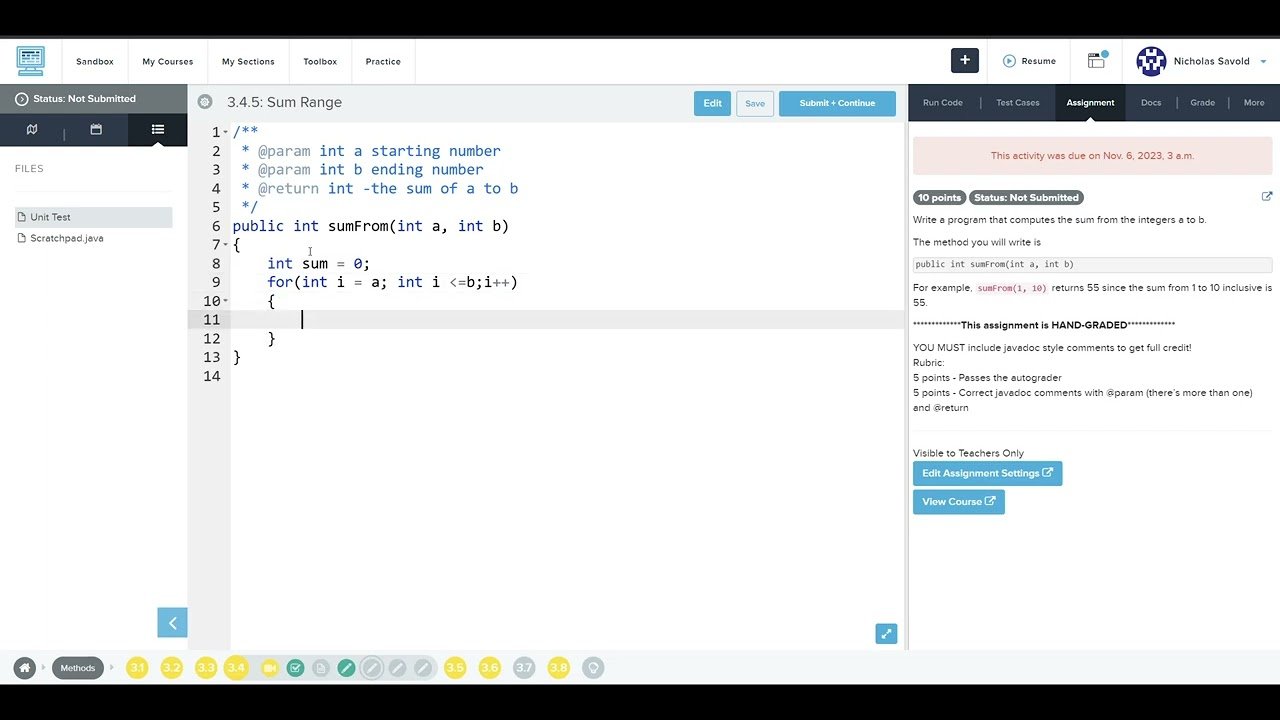
In today’s fast-changing digital world, learning how to code is no longer an optional skill. It has become a core part of modern education, shaping how students think, solve problems, and prepare for future careers. One platform that has played a significant role in this transformation is CodeHS. While many online tools promise to teach programming, CodeHS stands out because of its structured approach, academic focus, and classroom-friendly design. This article explores how CodeHS influences coding education, its strengths, challenges, and why it remains an important tool in learning environments.
Understanding the Purpose of CodeHS
CodeHS was created with a clear goal: to make computer science education accessible, structured, and meaningful for students and teachers. Instead of focusing only on self-paced learning, it emphasizes curriculum-based instruction. This makes it especially useful in schools where coding is taught as part of formal education rather than a hobby.
The platform introduces students to programming concepts step by step. Beginners are not overwhelmed with complex ideas at the start. Instead, they learn fundamental logic, syntax, and problem-solving skills before moving on to more advanced topics. This gradual learning curve helps students build confidence and consistency.
Structured Learning That Supports Mathematics and Logic
One of the strongest aspects of CodeHS is how closely it connects coding with logical thinking and mathematics. Programming is not just about writing lines of code; it is about understanding patterns, sequences, conditions, and functions. CodeHS lessons reinforce these ideas in a practical way.
Students frequently apply mathematical reasoning when solving coding challenges. Loops involve counting and iteration. Variables relate to algebraic thinking. Conditional statements mirror logical reasoning taught in math classes. Because of this, CodeHS does more than teach programming—it strengthens analytical skills that are useful across many academic subjects.
A Classroom-Focused Approach
Unlike many coding platforms designed for individual learners, CodeHS is heavily oriented toward classroom use. Teachers can assign lessons, track progress, review student work, and manage classes efficiently. This design makes it easier for schools to integrate coding into their existing schedules without disrupting other subjects.
Teachers who may not have a deep background in computer science benefit from ready-made lesson plans and clear explanations. This reduces the barrier to introducing coding in schools where specialized instructors may not be available. As a result, more students gain exposure to computer science at an earlier stage.
Learning Through Practice, Not Memorization
One of the biggest challenges in education is moving students away from rote memorization and toward true understanding. CodeHS addresses this by focusing heavily on hands-on practice. Students are required to write code, test it, make mistakes, and fix errors. This trial-and-error process is essential for developing real programming skills.
Mistakes are treated as learning opportunities rather than failures. When a program does not work, students are encouraged to analyze why. This builds resilience, patience, and critical thinking. Over time, learners become more comfortable tackling complex problems independently.
Building Confidence in Beginners
Many students approach coding with fear or self-doubt, believing it is too difficult or only meant for certain types of people. CodeHS helps break this mindset by offering clear instructions and achievable goals. Early successes play a crucial role in motivating learners to continue.
By completing small tasks and gradually progressing, students realize that coding is not mysterious or unreachable. This confidence often extends beyond programming, positively affecting performance in other subjects and boosting overall academic self-esteem.
Preparing Students for Future Opportunities
The job market increasingly values technical skills, and coding is at the center of many modern careers. CodeHS introduces students to industry-relevant concepts while keeping the learning environment educational rather than purely vocational.
Students gain exposure to different programming languages and problem-solving techniques. Even those who do not pursue a career in technology benefit from understanding how software works. This knowledge helps them become informed users and creators in a digital society.
Challenges and Limitations
While CodeHS offers many advantages, it is not without limitations. Some learners may find the structured environment restrictive if they prefer creative freedom early on. Others may progress at different speeds and feel either rushed or slowed down by a fixed curriculum.
Additionally, like any educational tool, its effectiveness depends on how it is used. Without proper guidance and encouragement, students may complete exercises mechanically without fully understanding the concepts. This highlights the continued importance of teachers in the learning process.
Encouraging Ethical and Responsible Coding
An often overlooked aspect of coding education is ethics. CodeHS introduces students to responsible coding practices, such as writing clean code and understanding the impact of technology on society. These lessons are subtle but important, reminding learners that programming skills carry responsibility.
As technology becomes more powerful, ethical awareness becomes just as important as technical ability. Early exposure to these ideas helps shape thoughtful and responsible future developers.
The Long-Term Educational Value
The true value of CodeHS is not limited to learning syntax or passing exams. Its long-term impact lies in shaping how students think. Logical reasoning, persistence, and structured problem solving are skills that remain useful throughout life.
Students who learn coding early often develop a growth mindset. They become more comfortable with challenges and more willing to experiment. These qualities are essential not only in technology fields but in any profession that values innovation and adaptability.
Final Thoughts
CodeHS plays a meaningful role in modern education by making computer science approachable, structured, and academically relevant. Its focus on logic, mathematics, and hands-on learning helps students develop skills that extend far beyond programming. While no single platform can meet every learner’s needs, CodeHS provides a strong foundation for schools and students looking to embrace coding as a core educational skill.
