
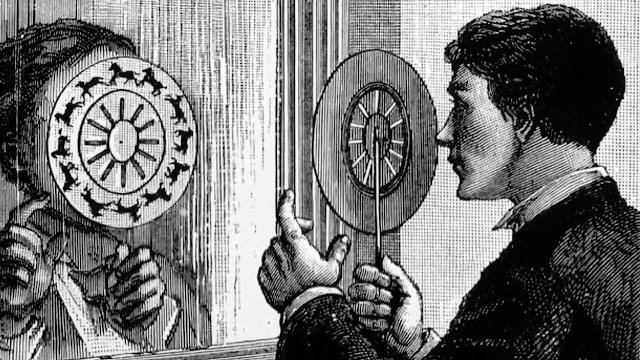
Joseph Antoine Ferdinand Plateau, a remarkable physicist of the 19th century, is a name that resonates in the history of science for his groundbreaking contributions to optics and visual perception. His work on the phenomenon of persistence of vision laid the foundation for modern cinematography, making him an unsung hero of the visual arts and science. Though some aspects of his life were challenging, Plateau’s intellect and perseverance turned his limitations into remarkable achievements.
Early Life and Education
Joseph Antoine Ferdinand Plateau was born on October 14, 1801, in Brussels, Belgium. From an early age, Plateau displayed a profound curiosity about the natural world. Despite being physically challenged due to a progressive eye condition that eventually left him completely blind, his passion for learning remained undiminished. His early education in local schools nurtured his aptitude for mathematics and physics, providing a solid foundation for the innovations he would later contribute to the world.
Plateau pursued higher studies at the University of Liège, where he earned recognition for his analytical skills and innovative thinking. He quickly distinguished himself with a deep understanding of physics, particularly in the areas of optics and light. This period of rigorous study and exploration laid the groundwork for his later groundbreaking research.
Scientific Contributions
Plateau is most famous for his work on the persistence of vision, a phenomenon where an image continues to appear in the human eye for a fraction of a second after it has disappeared. His experiments in this area were not only groundbreaking but also revolutionary, influencing the development of devices that would later lead to modern motion pictures.
One of Plateau’s key inventions was the phenakistiscope, created in 1832. This device, a spinning disc with sequential images, produced the illusion of motion when viewed through slits in the disc. The phenakistiscope demonstrated the principles of persistence of vision in a simple yet profound way, captivating both scientists and the general public. This invention is widely regarded as one of the earliest forms of animation, paving the way for the cinematic arts.
Beyond the phenakistiscope, Plateau made significant contributions to the study of liquid films and surface tension. His work in this area, particularly his investigations into the stability of soap films, led to the formulation of what is now known as Plateau’s laws. These laws describe the equilibrium properties of minimal surfaces formed by liquids and have influenced fields as diverse as materials science, mathematics, and architecture.
Overcoming Personal Challenges
Despite his immense scientific talent, Plateau faced extraordinary personal challenges. By the age of 30, he was completely blind due to a hereditary eye condition. For most, this would have been a devastating blow, particularly in a field like experimental physics. However, Plateau’s determination and intellectual resilience allowed him to continue his research, relying on his sharp memory, keen analytical mind, and the assistance of colleagues and students.
This ability to overcome adversity made Plateau a symbol of perseverance in the scientific community. His blindness did not hinder his creativity; rather, it honed his abstract thinking and problem-solving abilities. His life is a testament to the idea that limitations can be transformed into strengths when combined with passion and dedication.
Influence on Cinema and Visual Arts
Plateau’s pioneering studies on visual perception directly influenced the birth of cinema. The principles he uncovered in his experiments with the phenakistiscope and the persistence of vision became foundational for later inventors, including Thomas Edison and the Lumière brothers.
Modern animation, film, and even digital graphics owe a debt to Plateau’s early explorations. By demonstrating how sequential images can create the illusion of motion, he bridged the gap between physics and art, showing that scientific understanding can have profound cultural and creative implications.
His influence extends beyond entertainment; researchers in cognitive science and psychology also study Plateau’s findings to better understand human visual perception. The phenomenological insights he provided continue to inform studies on how the brain interprets motion and visual continuity.
Legacy in Science and Education
Plateau’s legacy is immense, both in theoretical and applied sciences. Plateau’s laws regarding soap films and minimal surfaces remain critical in modern physics and engineering. They inform research in materials science, nanotechnology, and even architecture, where understanding the equilibrium shapes of surfaces is essential.
In addition to his scientific work, Plateau was a dedicated educator. He served as a professor at the University of Ghent, where he inspired generations of students with his innovative experiments and passionate teaching style. Many of his students went on to make significant contributions in physics and related fields, extending Plateau’s influence far beyond his lifetime.
Recognition and Awards
Though he faced many obstacles, Plateau received numerous accolades for his work. In 1840, he was awarded the prestigious Copley Medal by the Royal Society of London, a recognition reserved for those who have made outstanding contributions to science. This honor reflected the high regard in which his contemporaries held his research, and it cemented his place among the leading physicists of his era.
Even today, Plateau is remembered as a visionary scientist who transformed both theory and practical understanding in his fields of study. Museums, scientific societies, and educational institutions continue to celebrate his contributions, particularly highlighting the phenakistiscope as a precursor to modern cinema.
Challenges in Modern Recognition
Despite his accomplishments, Plateau’s name is not as widely recognized outside scientific circles as some of his contemporaries. While his discoveries underpin critical advances in physics, engineering, and visual arts, the general public often remains unaware of his contributions. This lack of widespread recognition underscores the importance of educational initiatives that highlight historical figures whose work quietly shaped modern life.
Moreover, Plateau’s life reminds us that scientific progress often requires not just intelligence, but resilience, creativity, and the ability to see the world differently. His achievements illustrate that innovation can emerge even under the most challenging personal circumstances.
Conclusion
Joseph Antoine Ferdinand Plateau was a scientist whose genius transcended physical limitations. His contributions to optics, motion perception, and surface science laid the groundwork for advances that continue to influence modern science, technology, and art. Plateau’s life story is one of brilliance, perseverance, and enduring impact—a reminder that the pursuit of knowledge often requires courage as much as intellect.
By understanding and celebrating his achievements, we not only honor a remarkable physicist but also gain insight into the profound connections between science and human creativity. Plateau’s legacy continues to inspire researchers, artists, and educators alike, proving that vision—both literal and metaphorical—can illuminate the world in extraordinary ways.
