
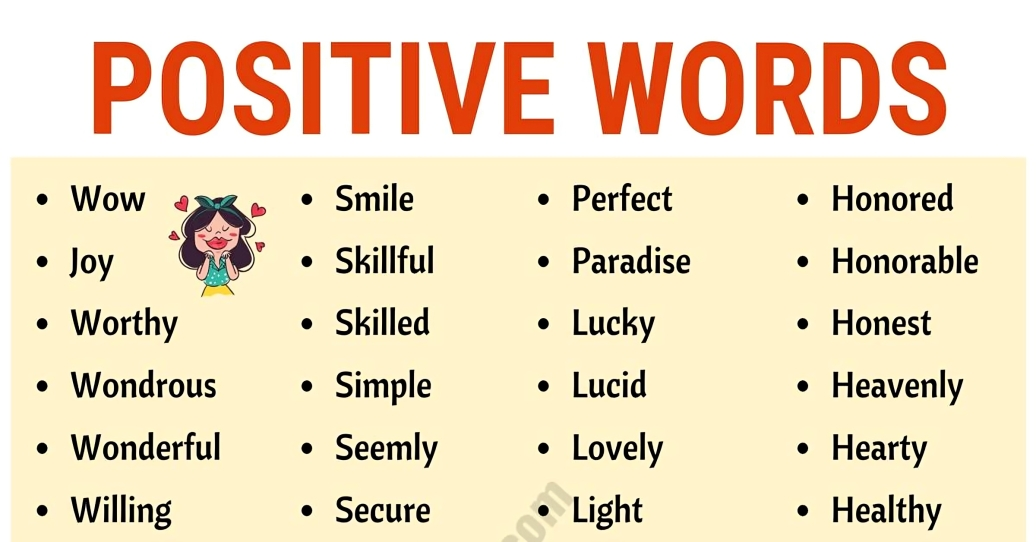
Words are more than just tools for communication—they shape our thoughts, influence our emotions, and guide our actions. Among all types of language, positive words hold a unique and powerful place. They can uplift moods, strengthen relationships, improve mental health, and even influence success in personal and professional life.
In today’s fast-paced and often stressful world, the words we choose matter more than ever. Whether spoken, written, or thought silently, positive words have the ability to change how we see ourselves and the world around us.
In this in-depth article, we’ll explore what positive words are, why they matter, how they impact the brain, and how you can intentionally use them in daily life. You’ll also find practical examples, categorized lists, and actionable tips to help you harness the true power of positive language.
What Are Positive Words?
Positive words are words that express optimism, encouragement, kindness, confidence, hope, gratitude, and constructive emotions. These words promote emotional well-being and create a supportive mental and social environment.
Examples of positive words include:
- Happy
- Confident
- Grateful
- Strong
- Capable
- Inspired
- Loved
- Hopeful
Positive words can be adjectives, verbs, nouns, or even affirmations. What makes them “positive” is not just their dictionary meaning, but the emotional response they create in the listener or reader.
Why Positive Words Matter More Than You Think
Many people underestimate the influence of language. However, research in psychology and neuroscience shows that words can significantly affect brain function, emotional states, and behavior.
Here’s why positive words are so important:
1. They Shape Your Thoughts
Your internal dialogue—the words you say to yourself—forms the foundation of your mindset. When you consistently use positive words, your brain begins to adopt more optimistic thinking patterns.
For example:
- Saying “I can learn this” instead of “I’m bad at this” encourages growth.
- Saying “I’m improving” instead of “I always fail” builds resilience.
2. They Influence Emotions
Words are directly connected to emotions. Positive words trigger feelings of hope, calm, motivation, and happiness, while negative words often activate stress and fear responses.
3. They Affect Relationships
The way you speak to others determines the quality of your relationships. Using positive words builds trust, respect, and emotional connection.
4. They Impact Mental and Physical Health
Studies suggest that positive language can reduce stress, lower anxiety, and even support physical healing by promoting a calmer nervous system.
The Science Behind Positive Words
The human brain responds differently to positive and negative language. When you hear or read positive words, your brain releases neurotransmitters like dopamine and serotonin—chemicals associated with happiness, motivation, and emotional balance.
On the other hand, negative words can activate the amygdala, the part of the brain responsible for fear and stress responses.
This means that choosing positive words isn’t just about being “nice”—it’s about creating healthier brain patterns.
Benefits of Using Positive Words Daily
Let’s look at the long-term benefits of intentionally using positive words in everyday life.
1. Improved Self-Confidence
Positive words reinforce belief in yourself. Words like capable, worthy, and strong help counter self-doubt and build inner confidence.
2. Better Communication Skills
When you communicate using positive language, people are more likely to listen, cooperate, and respond positively.
3. Enhanced Motivation and Productivity
Positive words encourage action. Phrases like “You’re making progress” or “You can do this” boost motivation and focus.
4. Stronger Emotional Resilience
Life is full of challenges, but positive words help you reframe difficulties and recover faster from setbacks.
Categories of Positive Words (With Examples)
To make positive words easier to use, let’s explore them by category.
Positive Words for Self-Confidence
- Confident
- Capable
- Strong
- Worthy
- Empowered
- Resilient
- Brave
- Skilled
These words are especially useful for affirmations and self-talk.
Positive Words for Happiness and Joy
- Happy
- Cheerful
- Joyful
- Content
- Peaceful
- Delighted
- Fulfilled
- Excited
Using these words helps reinforce positive emotional states.
Positive Words for Encouragement and Motivation
- Inspired
- Motivated
- Determined
- Focused
- Energized
- Committed
- Persistent
- Optimistic
These words are powerful in both personal development and leadership settings.
Positive Words for Kindness and Relationships
- Kind
- Compassionate
- Supportive
- Understanding
- Caring
- Patient
- Respectful
- Loving
Kind words strengthen emotional bonds and improve communication.
Positive Words for Gratitude and Appreciation
- Grateful
- Thankful
- Appreciative
- Blessed
- Acknowledged
- Valued
Gratitude-focused positive words improve mental well-being and life satisfaction.
How to Use Positive Words in Daily Life
Knowing positive words is helpful, but using them consistently is what creates real change.
1. Practice Positive Self-Talk
Pay attention to how you speak to yourself. Replace harsh inner criticism with supportive language.
Instead of:
“I always mess things up.”
Try:
“I’m learning and getting better.”
2. Use Positive Words in the Morning
Start your day with positive words or affirmations. This sets the emotional tone for the entire day.
Example affirmations:
- “I am capable and confident.”
- “Today is full of opportunities.”
- “I choose positivity and growth.”
3. Improve Conversations With Positive Language
Small changes in wording can transform conversations.
Instead of:
- “That won’t work.”
Try:
- “Let’s explore another option.”
4. Write With Positive Words
Journaling with positive words helps reinforce gratitude and clarity. Writing about positive experiences trains the brain to notice good things more often.
5. Use Positive Words on Social Media and Online Content
Words shared online have real emotional impact. Choosing positive words helps create a healthier digital environment—and improves engagement if you’re a content creator.
Positive Words in Professional and Business Life
Positive words aren’t just for personal growth—they’re also essential in the workplace.
Leadership and Team Motivation
Leaders who use positive words inspire loyalty and productivity. Simple phrases like “Great effort” or “I appreciate your work” can dramatically improve morale.
Customer Communication
Positive words build trust with customers. Words like reliable, helpful, committed, and quality influence buying decisions and brand perception.
The Role of Positive Words in Personal Development
Personal growth starts with awareness—and language plays a central role. When you describe yourself and your goals using positive words, you reinforce belief and consistency.
For example:
- “I am becoming more disciplined.”
- “I am open to learning.”
- “I am proud of my progress.”
These statements may seem simple, but repeated over time, they reshape identity and behavior.
Common Mistakes When Using Positive Words
While positive words are powerful, they should be used authentically.
Avoid these mistakes:
- Forced positivity: Ignoring real emotions can be unhealthy. Acknowledge challenges while choosing constructive language.
- Overuse in marketing: Keyword stuffing with “positive words” can hurt SEO. Always aim for natural flow.
- Empty compliments: Positive words should be sincere and specific to be effective.
Final Thoughts: Make Positive Words a Daily Habit
Positive words are not just feel-good expressions—they are tools for transformation. The language you use every day influences your thoughts, emotions, actions, and ultimately your life direction.
By consciously choosing positive words, you take control of your mindset, improve your relationships, and create a more supportive inner and outer world.
You don’t need to change everything at once. Start small:
- Replace one negative thought with a positive word.
- Offer one kind compliment.
- Write one encouraging sentence to yourself.
Over time, these small changes compound into powerful results.
