
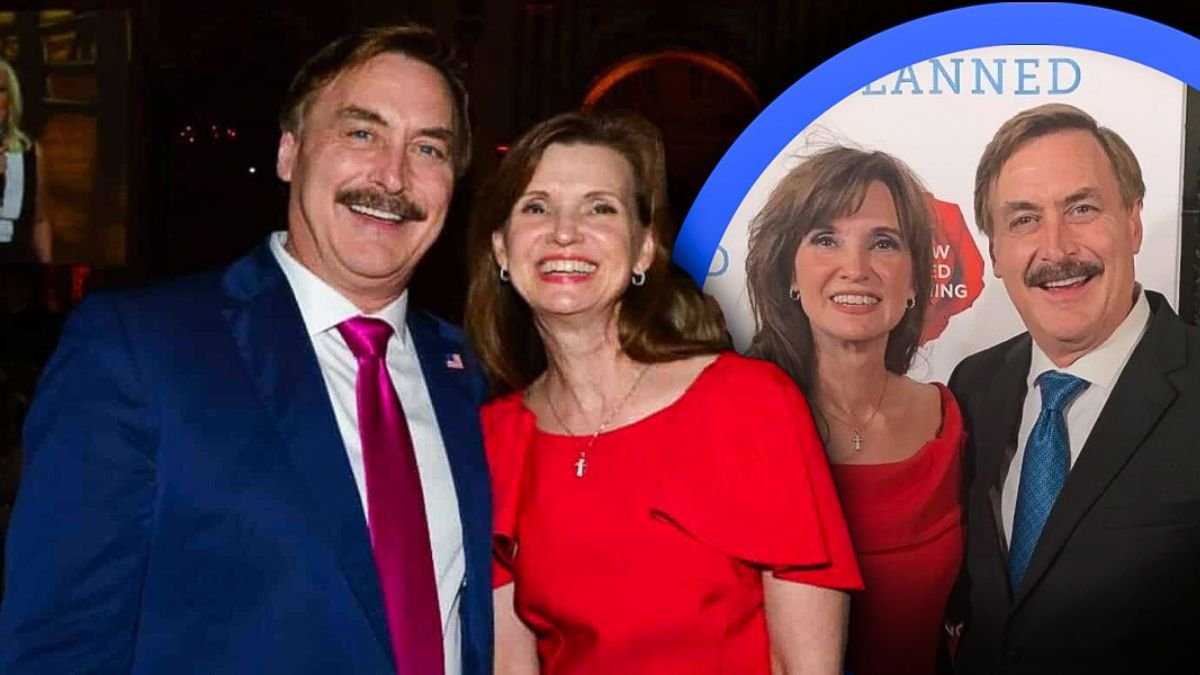
Dallas Yocum is a name that occasionally surfaces in public conversation, not because of a long list of public appearances or outspoken interviews, but because of her brief association with a high-profile figure and her subsequent decision to step away from the spotlight. In an era where visibility is often equated with relevance, Dallas Yocum represents something increasingly rare: a person who became widely searched yet consistently chose privacy over publicity.
This article explores Dallas Yocum in a factual, respectful, and balanced way, focusing on what is publicly known while acknowledging the limits of that knowledge. Rather than speculation or exaggeration, the goal here is to understand why her name continues to attract attention and what her story tells us about modern fame, personal boundaries, and public curiosity.
Who Is Dallas Yocum?
Dallas Yocum is widely known due to her brief marriage to businessman Mike Lindell. The marriage itself was short-lived, lasting only a matter of weeks, and ended in divorce. Beyond that association, Dallas Yocum has not sought a public-facing role, nor has she attempted to capitalize on the attention that followed the relationship.
What makes Dallas Yocum notable is not a long career in entertainment, business, or politics, but rather the contrast between intense public interest and her consistent absence from public discourse. This dynamic has made her a frequent subject of online searches, despite the limited amount of verified information available about her personal life.
Public Attention Without Public Participation
One of the most striking aspects of Dallas Yocum’s story is how little she has said publicly. In a digital culture driven by interviews, statements, and social media presence, her silence stands out. This has led to curiosity, assumptions, and sometimes misinformation, which often fills the gaps left by a lack of firsthand accounts.
However, choosing not to engage publicly is not an admission of anything negative. On the contrary, it can be interpreted as a deliberate effort to protect personal identity and mental well-being. Dallas Yocum’s approach highlights an important truth: not everyone connected to a public figure wants to become one themselves.
The Meaning of Privacy in a Search-Driven World
The continued interest in Dallas Yocum raises broader questions about privacy. Why does the public remain fascinated by individuals who are not actively shaping public narratives? The answer lies partly in how search engines and online media operate. Once a name becomes associated with a widely known figure, it can remain in circulation indefinitely.
Dallas Yocum’s situation demonstrates how difficult it can be to return to anonymity once public curiosity is sparked. Even without new developments or public actions, her name persists in digital spaces, often detached from context. This makes responsible discussion especially important.
Separating Facts From Assumptions
A key challenge in writing about Dallas Yocum is avoiding speculation. There are no verified reports of ongoing public projects, controversies initiated by her, or attempts to influence public opinion. Most factual accounts agree on only a few points: her marriage was brief, the separation was decisive, and she chose not to remain in the public eye.
Anything beyond those points often enters the realm of assumption. Responsible content avoids framing silence as mystery or absence as wrongdoing. Dallas Yocum’s lack of public commentary should be seen as a choice, not an invitation for interpretation.
Why the Name Still Trends
Search interest in Dallas Yocum continues for several reasons. First, people are naturally curious about the personal lives of well-known figures and those connected to them. Second, the brevity of her public story leaves many unanswered questions, which can fuel repeated searches. Finally, algorithmic systems tend to resurface names that have already shown high engagement, regardless of whether new information exists.
This cycle can make a person seem more prominent than they actually are. In Dallas Yocum’s case, the digital footprint is larger than her public involvement, creating an imbalance that often confuses readers.
Media Responsibility and Reader Awareness
Dallas Yocum’s example underscores the importance of ethical media consumption and production. Writers and readers alike share responsibility in shaping narratives. Sensationalism may attract attention, but it often does so at the expense of accuracy and fairness.
A well-rounded perspective acknowledges that some individuals do not owe the public an explanation of their lives. Dallas Yocum has never positioned herself as a public authority or influencer, and treating her as such would be misleading.
A Broader Cultural Reflection
Beyond the individual, the story of Dallas Yocum reflects a larger cultural pattern. Modern society often blurs the line between public interest and personal life. The assumption that visibility is mandatory can pressure individuals into unwanted exposure.
Dallas Yocum’s retreat from attention challenges that assumption. Her choice serves as a reminder that stepping back is not failure, avoidance, or secrecy—it can simply be self-determination.
Conclusion
Dallas Yocum remains a figure defined more by public curiosity than by public action. What is known about her can be summarized briefly, but what her story represents is far more expansive. She embodies the tension between digital permanence and personal privacy, between public fascination and private choice.
Rather than framing her story as a mystery or controversy, it is more accurate—and more respectful—to view it as an example of someone who encountered sudden attention and chose not to pursue it. In a world where attention is often treated as currency, Dallas Yocum’s quiet path offers a different, and perhaps refreshing, perspective.
By focusing on verified facts, avoiding speculation, and respecting personal boundaries, discussions about Dallas Yocum can remain informative without becoming intrusive. That balance is not only fair to her, but essential for responsible content in the modern age.
