
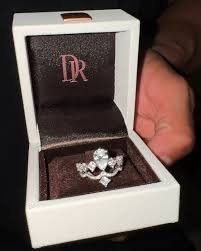
Darry Ring (often stylized as DR) has become one of the most talked-about jewelry brands of recent years — not just because of its elegant designs, but because of its deeply emotional, high-stakes “one ring in a lifetime” philosophy. At first glance, it’s a romantic promise: a ring you can buy only once, for one special person. But once you dig deeper, the concept reveals some risky social, psychological, and even ethical implications. Below, we explore what Darry Ring is, how much it costs, and why its seemingly innocent promise may actually be more dangerous than it appears.
What Is Darry Ring?
Darry Ring is a jewelry brand founded in 2010 in Shenzhen, China, by Guotao Zhang (Tony) and Yiwen Lu (Wendy). What sets them apart is their “One Love, One Lifetime” philosophy: when you buy a Darry engagement ring, you commit to that one person forever — at least in the eyes of the brand.
To enforce this, the purchasing process involves real-name verification: buyers must submit an official ID (like a passport or national ID) when ordering. Once the identity check is passed, the buyer signs what the brand calls the True Love Agreement, naming the individual for whom the ring is intended. That purchase is recorded, permanently tied to that person’s identity, and — at least in theory — you cannot buy another engagement ring from Darry Ring for someone else.
This policy is not just symbolic: Darry Ring markets it as a profound emotional commitment, not merely a transaction. Their diamonds are certified by recognized institutions (GIA, IGI, NGTC), which reassures customers of the material quality.
How Much Does a Darry Ring Cost?
The price of a Darry Ring is far from modest — it reflects both the luxury materials and the symbolic exclusivity of their “once in a lifetime” model.
- According to pricing data, lab-grown Darry Rings start at around US$1,490 and go up to roughly US$3,800, depending on factors like carat size, clarity, and the metal of the band.
- For natural (mined) diamond rings, prices often begin near US$3,000 and can climb — in 18K gold — to about US$8,900.
- The most premium variants — for example, a 1-carat natural diamond set in platinum with a halo design — may reach up to US$12,800.
These prices typically include not only the diamond and the setting but additional services: a certificate, lifetime resizing, and insured express delivery. Optional extras like a loss-protection plan can add more.
Why People See It as Romantic — and Risky
The Emotional Allure
On the surface, Darry Ring’s “one ring, one love” concept is deeply romantic. It’s designed to make the ring feel like more than a piece of jewelry: it’s a sacred promise. The brand’s narrative — reinforced through social media, video ads, and its stores — encourages buyers to see the ring not just as a physical object, but as a lifelong commitment.
For many, this is powerful. According to TikTok and Reddit discussions, people are drawn in by the symbolic weight and exclusivity. It can feel like a once-in-a-lifetime romantic milestone rather than a routine purchase.
The Psychological Risk
However, this very exclusivity also brings psychological danger. By making the ring a once-only, identity-verified purchase, the brand places enormous emotional stakes on a single moment in time. If something goes wrong in the relationship — a breakup, loss, or regret — the buyer cannot simply “restart” their Darry Ring story. That permanence can create pressure and regret.
Some users on Reddit have expressed concern that this model feels less like a celebration of love and more like a marketing manipulation of deep emotional longing:
“The ‘one ring per lifetime’ concept sounds nice, but … you’re just paying extra for branding.”
“If I got it for real I admit I would explode with happiness … But then I also worry I’d never get that again.”
In fact, some critics suggest the intense emotional marketing may prey on insecurity: what if someone was previously in a serious relationship and gave a Darry Ring to someone else first, leaving a future partner feeling like they missed out on “the one”?
Darry Ring’s own strategy seems built to appeal to consumers who place a premium not just on love, but on the proof of love.
Controversies and Potential Dangers
Identity Verification and Data Risks
The requirement for personal ID is central to Darry Ring’s promise, but it also raises privacy and security concerns. By collecting and storing buyers’ identity information, the brand handles sensitive data. Some reports indicate that the verification system has had flaws, such as the ability to register with just an ID number, creating possibilities for misuse.
“One-Ring” Model: Gimmick or Commitment?
Critics argue that the “one ring for life” policy may be more of a marketing gimmick than a sustainable commitment model. Some customers feel they’re paying a premium not purely for quality diamonds, but for the emotional concept and exclusivity.
There have also been rumors — denied by Darry Ring — about loopholes, such as “record deletion” for a fee so someone could bypass the one-ring rule. Whether or not these allegations are true, such stories feed concern that the brand’s carefully marketed commitment may not be as ironclad as it seems.
Sustainability and Ethical Concerns
While Darry Ring claims its diamonds are conflict-free and sourced responsibly, some academic voices warn of underlying risks. The “celebrity effect” in Darry Ring’s marketing, for instance, may overshadow fundamental issues about long-term sustainability. There’s also the question of whether selling a promise (rather than a product) may amplify consumer vulnerability.
Emotional Toll of Breakups
For people who buy a Darry Ring and later face heartbreak, the emotional cost can be more intense than with a conventional ring. Because the brand’s policy enforces a lifelong promise, a breakup isn’t just a personal loss — symbolically, one party may feel they’ve violated a lifelong contract. Some have argued that this could even discourage people from leaving unhealthy relationships, simply due to the weight of the “forever” narrative.
Is It Worth It — or Too Risky?
For some buyers, Darry Ring may be deeply meaningful. If you value symbolism, tradition, and the idea of giving a forever promise, the extra cost and verification process might feel worth it. The emotional payoff can be significant, especially for people who resonate with the brand’s deep-commitment narrative.
But for others, the model might feel overbearing. As many skeptical voices note: you can get high-quality diamonds elsewhere, often for less, without a lifetime-bound contract. And the permanence of ID-based registration can introduce real anxiety — what if things change? Relationships evolve, people change identity, and life doesn’t always follow a fairy-tale script.
Moreover, from a consumer-protection standpoint, the storage of personal identity data adds risk. Any system that ties a physical product to your real-world identity permanently demands rigorous security — and not all consumers may fully grasp that when caught up in the emotion of “true love.”
Conclusion
Darry Ring is more than a ring brand — it’s a bold fusion of romance, commitment, and luxury. Its “one ring, one lifetime” promise resonates deeply with people who dream of unbreakable vows and symbolic permanence. But that very promise is a double-edged sword: while it creates powerful emotional value, it also carries significant risks.
From identity verification and data sensitivity, to emotional vulnerability, to potential regrets if things go wrong, Darry Ring’s model can be dangerous in subtle but meaningful ways. It’s not just a purchase — it’s a commitment with weight, and not everyone may be ready for its consequences.
If you or someone you know is considering a Darry Ring, it’s worth asking: Are you buying for love, or for the idea of love? And are you ready for what “once in a lifetime” might really mean — in good times, and in bad?
