
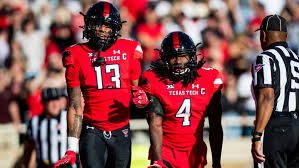
The story of Texas Tech Red Raiders football is one of perseverance, reinvention, and — in recent times — a surge toward renewed greatness. Representing Texas Tech University and based in Lubbock, Texas, the Red Raiders have woven themselves into the fabric of American college football. As of 2025, they stand as a program that honors its history while boldly chasing new heights.
Origins and Early Years
The Red Raiders first donned pads in 1925, launching their college‑football journey with a 0–0 game against McMurry University. Over time, the program navigated regional leagues — joining the Border Intercollegiate Athletic Association in the 1930s and later the Southwest Conference (SWC).
These early decades laid the groundwork: foundational seasons, bedrock traditions, and incremental growth. Though dreams of national prominence lay ahead, these formative years shaped the identity of a program that would come to balance grit, offense, and a relentless spirit.
Building a Legacy: Conferences, Championships, and Identity
Over nearly a century, Texas Tech has claimed 11 conference titles across different affiliations and captured one division title — the most recent being the Big 12 South crown in 2008.
Through those seasons, the Red Raiders amassed a storied tradition. By 2025, their all-time record stands a strong 606 wins, 486 losses, and 32 ties. Their bowl record and postseason history show just how frequently Tech has competed on big stages — a testament to the program’s competitive consistency.
Crucially, the team plays home games at the iconic Jones AT&T Stadium, a venue that has housed decades of football, memories, and passionate fan support.
Over time, Texas Tech forged rivalries with several college football powers — rivalries with teams like Texas Longhorns, Texas A&M Aggies, Baylor Bears, TCU Horned Frogs and others — giving the program both regional flavor and national recognition.
The 21st Century: Offenses, Upsets, and Identity
The modern era of Texas Tech football has often been defined by dynamic offenses, high‑scoring games, and the “air raid” style that made fans sit up and take notice. That said, this period also brought ups and downs, with streaky seasons and frequent changes off the field.
One of the high points came in 2008, when Tech’s explosive play led to a memorable season — one that remains a reference point for both fans and the program’s ambitions.
But like many storied college programs, Tech had its share of tough years too: rebuilding phases, roster turnover, coaching changes — all part of the long game of sustaining success.
The 2025 Resurgence: A Statement Year
2025 stands out as a turning point — perhaps one of the most significant seasons in Texas Tech history.
- The 2025 squad is led by head coach Joey McGuire, in his fourth year at the helm.
- Under McGuire, and with a revamped staff and key new coordinators, Tech adopted a “run‑and‑gun” offensive scheme and a flexible multiple 3–4 defensive alignment.
- Through the regular season they reached an 11–1 (8–1 in conference) record — one of the best seasons the program has had in decades.
- This performance earned them a berth in the conference championship game — the program’s first appearance in the Big 12 Championship Game in its history.
- What’s remarkable: throughout the 2025 season, Texas Tech has been the only FBS school yet to trail in a game. Their dominance is underlined by an average margin of victory of 35.3 points — by far the best in the country.
These statistics reflect not just wins, but an entirely elevated standard. The Red Raiders are not merely competitive — they’re asserting themselves as elite.
Recruiting, Roster, and Program Momentum
Key to this resurgence has been smart roster building and capitalization on modern recruiting mechanisms. For 2025, Texas Tech signed one of the top transfer‑portal classes in the country, according to respected recruiting services.
But it’s not just about transfers — some core returners give the roster balance and continuity. Notably:
- Quarterback Behren Morton returned for the 2025 campaign, bringing experience and familiarity to the offense.
- Defensive stalwart Jacob Rodriguez, recognized previously as All‑Big 12, added leadership and continuity to a defense that needed bite after a few transitional seasons.
This blend of incoming talent and seasoned contributors has formed a roster that’s deep, hungry, and — increasingly — battle tested.
The Culture Shift: Selling Out Stadiums & A Renewed Fan Base
Perhaps as telling as on‑field success is the renewed energy among fans. Jones AT&T Stadium has seen sellouts for the first six home games of 2025 — a sign of growing optimism and renewed faith.
Ticket demand and attendance trends point to a deeper phenomenon: fans sense something different. This isn’t just another rebuild — it’s a rekindling of pride, identity, and expectation for Texas Tech football.
For a program with decades of history, this culture shift could mark the beginning of a new era.
Legacy, Identity, and What’s Next
For nearly a century, the Red Raiders have navigated changes — in conferences, coaching staffs, and college football’s overall landscape. Through it all, they maintained a consistent identity: resilient, audacious, adaptive.
The 2025 season amplifies that identity. It suggests that Texas Tech is no longer just chasing history — it’s building a new one. Already, the program has shown it can recruit elite talent, execute a modern offense, dominate games, and win consistently.
But questions linger: Can the Red Raiders sustain this pace? Will they seize the conference title and make a deep postseason run? Can they build on this momentum to contend nationally — not just in the Big 12?
Given what we see so far: yes, the foundations are there. The coaching staff, players, and fan base seem aligned. The momentum is real.Conclusion: Texas Tech’s Next Chapter
From a 0–0 tie in 1925 to an 11–1 powerhouse team in 2025, the journey of Texas Tech football is remarkable — full of twists, reinvention, and resurgence. The Red Raiders have proven they can evolve, adapt, and reclaim competitiveness, even in an ever‑changing college‑football landscape.
As the 2025 season unfolds — and as Texas Tech heads into postseason play — one thing is clear: this is more than just a good year. It may well be the start of a renaissance. For longtime fans and newcomers alike, the Red Raiders are once again a program to watch, believe in, and champion.
Here’s to the next chapter of Texas Tech — may it honor the past, embrace the present, and chase the future with the same fearless spirit that built it.
