
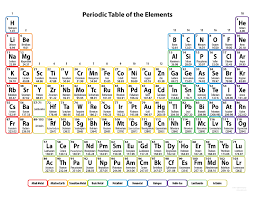
A “printable periodic table” seems like a simple concept — a chart you can print out to paper — but in practice, it is an extremely powerful tool for students, teachers, chemists and science enthusiasts. In this article, we explore what printable periodic tables are, why they remain relevant in the digital age, different types available, and best practices for using them for learning, teaching, and reference.
What Is a Printable Periodic Table?
A printable periodic table is essentially a version of the periodic table of chemical elements that is designed to be printed — on A4, letter, poster‑size, or other paper dimensions — instead of being viewed only on a screen. Usually, such tables are available in PDF (or sometimes PNG/SVG) format, with clear layout including essential data like:
- Element’s symbol (e.g., H, He, Fe)
- Atomic number
- Element name
- Atomic mass (or relative atomic mass)
More advanced printable tables may include additional data — such as electronegativity, common oxidation states (charges), valence electrons, electron configuration, or even physical properties — depending on the purpose or design.
Some printable tables are minimal and printer-friendly (black and white, minimal ink), others are color-coded, aesthetic, or designed for posters or classroom walls.
In short: a printable periodic table is a “hard copy” of the chemical elements chart, optimized for readability and print.
Why Printable Periodic Tables Are Still Important
1. Instant Offline Access — No Internet Required
One of the biggest strengths of a printable periodic table is that it’s accessible offline. Once printed (or downloaded on a device), you don’t require any internet access. This is particularly useful in classrooms, labs, exam halls, or study environments where internet access might be limited or restricted.
2. Quick Reference — Faster Than Digital Navigation
Although interactive and digital periodic tables are convenient, clicking, zooming, or navigating tabs can take time. A printed chart puts all information on a single page — you can glance at atomic numbers, symbols, and masses instantly. For quick reference during assignments, lab work, or problem solving, a printed sheet is often more efficient. Many printable tables are designed to fit neatly on a single sheet (e.g., A4 or standard letter size) so you have everything at a glance.
3. Visual Learning and Memorization Aid
Visual learners benefit greatly from printable, color-coded periodic tables. Eyes easily follow grouping patterns (like metals vs. non‑metals; alkali metals; halogens; noble gases), periodic trends (atomic mass, electronegativity), and block organization (s‑, p‑, d‑, f‑blocks). For many students, seeing these trends visually on paper helps internalize periodicity, element relationships, and recurring patterns more effectively than memorizing through text.
4. Flexibility, Customization, and Personal Use
Printable periodic tables are often customizable. Depending on the version, you can choose black‑and‑white or color output; you can hide or reveal categories; or you can opt for a “blank periodic table” version — with empty boxes — to practice filling in element names, symbols, or numbers (a useful memorization exercise).
Further: you may print multiple copies, annotate them, highlight important elements, group similar ones, or even create flashcards from them. This kind of flexibility makes printable tables useful not only in classrooms but also for self‑study, group study, tutoring, and homeschooling.
5. Cost‑Effective and Easy to Distribute
Many printable periodic tables are offered free of cost — requiring no subscription or payment. Teachers can download and print multiple copies for entire classes; students can print one for themselves; even large posters can be printed for classroom walls or lab rooms. This saves the cost of buying printed textbooks or posters.
Types of Printable Periodic Tables
Not all printable periodic tables are the same. Depending on their design and intended use, you’ll find varying types. Here are some of the common ones:
• Standard / Basic Tables
These contain the core information — element symbol, atomic number, atomic mass (or relative mass), and name. They are typically minimalistic, often in black-and-white, optimized for printing on a single A4 or letter-size sheet. Useful for quick reference, exams, notebooks, and general study.
• Color‑Coded Tables
These tables use colors to distinguish element groups (e.g., alkali metals, noble gases, transition metals, metalloids, non‑metals). This visual grouping helps in easier recognition and better memory retention. Such versions are ideal for classroom posters, wall charts, home study room, or when you want to visually capture periodic trends.
• Detailed / Data‑Rich Tables
Some printable periodic tables go beyond the basics: they include additional information such as oxidation states (common charges), valence electrons, electron configuration, electronegativity, and other chemical properties. These are especially helpful for advanced chemistry students or those doing lab work and studying chemical behavior.
• Blank / “Fill‑in” Tables
A “blank periodic table” version omits element names or symbols (or both), giving empty boxes. This is useful for self-testing and memorization: students can print blank tables and attempt to fill in all element symbols, atomic numbers, etc. It is a great tool for practicing recall, especially for early learning or exam preparation.
• Poster‑Size / High‑Resolution Tables
These are designed for large format — suitable for classroom walls, labs, or study rooms. They may come in A3, A2, or even larger formats, often with high-resolution graphics, clear labels, and sometimes additional educational info (like block divisions, periodic trends, or color-coded categories).
Who Benefits from Printable Periodic Tables
➤ Students (High School / College)
Whether you’re just beginning chemistry or advancing into more complex topics, a printed periodic table is a constant companion. Use it for home study, exam revision, homework — or keep it pasted inside your notebook or binder. Its offline availability and ease of reference make it ideal for frequent use.
➤ Teachers and Tutors
Teachers can download printable tables and distribute copies to their students, paste them in classrooms, or use them as handouts during lessons. Colored or poster versions are especially helpful when teaching element groups, periodic trends, or for lab walls to create a reference environment.
➤ Homeschoolers and Self‑Learners
If you study chemistry on your own, printable tables can serve as study aids, reference charts, or self‑testing sheets (particularly blank tables). They give flexibility and convenience without needing expensive textbooks or subscriptions.
➤ Lab Technicians, Hobbyists, and Science Enthusiasts
Even outside formal education, anyone interested in chemistry — hobbyists, DIY chemists, lab techs — benefits from having a printed periodic table ready for quick checks, references, or as a wall poster to foster curiosity.
Good Practices & Tips for Using Printable Periodic Tables
If you plan to make the most out of a printable periodic table — whether for personal use, teaching, or study — here are some helpful tips:
- Choose the right format and size: For quick reference or notebook use, go for A4/letter-size. For wall posters or group settings, consider high-resolution larger formats (A3 or above).
- Color vs. Black & White: Use color-coded tables for visual learning, group classification, and trend recognition. For printing many copies or for exam preparation, black-and-white tables save ink and remain functional.
- Laminate or protect important copies: If you rely heavily on a printed table — for lab work, frequent use, or poster wall — consider laminating it to prevent wear and tear.
- Use blank tables to practice: Download a blank/“fill-in” version, print, and test yourself — fill in element symbols, atomic numbers, masses. It’s a simple but effective method to memorize the table.
- Annotate & customize: Leave space (or use margins) for your own notes — e.g., highlight frequently encountered elements, mark oxidation states, circle important groups, or write typical compounds. This helps personalize the chart for your needs.
- Keep an updated version: As new elements are discovered and recognized, ensure your periodic table includes all current elements (up to 118). Many modern printable tables conform to current standards.
Challenges and Limitations
While printable periodic tables are incredibly useful, they also come with some limitations compared to digital/interactive tables:
- Static information: Once printed, the data stays fixed; you cannot easily update or expand properties (e.g., isotopes, oxidation states, interactive trends).
- Limited space: Including too much information (electron configuration, trends, detailed data) might make each element cell too cramped, reducing readability — especially on small-size printouts.
- Printer quality matters: For color-coded or detailed tables, a low-quality printer may blur colors or make text unreadable. For best results, a good printer or professional print shop is preferable.
- Non‑interactive: Unlike interactive digital tables (where you can click an element for detailed information, isotope data, history, uses, etc.), a printout remains a static reference.
Because of these trade‑offs, many learners and educators use a combination — keeping a printed table for quick reference, and using interactive/digital tables when deeper detail or updates are needed.
Where to Get High‑Quality Printable Periodic Tables
There are many sources online offering free downloadable periodic table PDFs (or PNGs/SVGs). These often include multiple versions — color-coded, black-and-white, blank, detailed, or simplified — so you can pick according to your needs.
Some common formats you might find:
- Standard 118‑element table — showing all chemical elements from Hydrogen (H) to Oganesson (Og), with atomic number, symbol, name, atomic mass.
- Color‑coded group table — with visual separation of element categories (metals, nonmetals, noble gases, etc.) for easier memorization.
- Data‑rich table — with additional chemical properties such as oxidation states, electronegativity, valence, electron configuration, etc.
- Blank table — empty cells for self‑test or practice.
- Poster‑size high-resolution table — ideal for classrooms, labs, or study rooms.
For example, some printable tables allow layered PDFs where you can show or hide data depending on what you need — such as hiding names or categories to create quizzes or study worksheets.
Best Use Cases: When a Printable Periodic Table Excels
- Exam preparation & revision: A printed table on paper — in your notebook or pasted on your wall — helps quick recall of element symbols, atomic numbers, masses, and group/period patterns.
- Laboratory or practical work: When doing experiments or calculations, having a physical chart nearby avoids switching tabs or distracting digital devices.
- Teaching / classroom environment: Teachers can distribute printed copies, hang posters on walls, or give blank tables for practice. It becomes a shared, visible reference for students.
- Self-study and homeschooling: For learners studying independently, printable tables are cost‑effective, easy to print, and customizable to fit individual learning pace and style.
- Science outreach / hobbyists: For anyone curious about chemistry — even if not formally studying — a printed periodic table is a simple but powerful way to explore and appreciate the elements.
Conclusion
In a world increasingly reliant on digital resources, the humble printable periodic table remains surprisingly relevant — and for good reason. It offers reliability, flexibility, ease of use, and a tactile, visually intuitive way to engage with the fundamental building blocks of chemistry. Whether you are a student preparing for exams, a teacher standing at the blackboard, a lab technician doing calculations, or a curious mind drawn to the beauty of chemical elements, a printable periodic table is a versatile, accessible tool that has stood the test of time.
By choosing an appropriate version — basic, color‑coded, data‑rich, blank, or poster-sized — and using it thoughtfully, you can make your learning or teaching journey smoother, more organized, and visually meaningful.
