
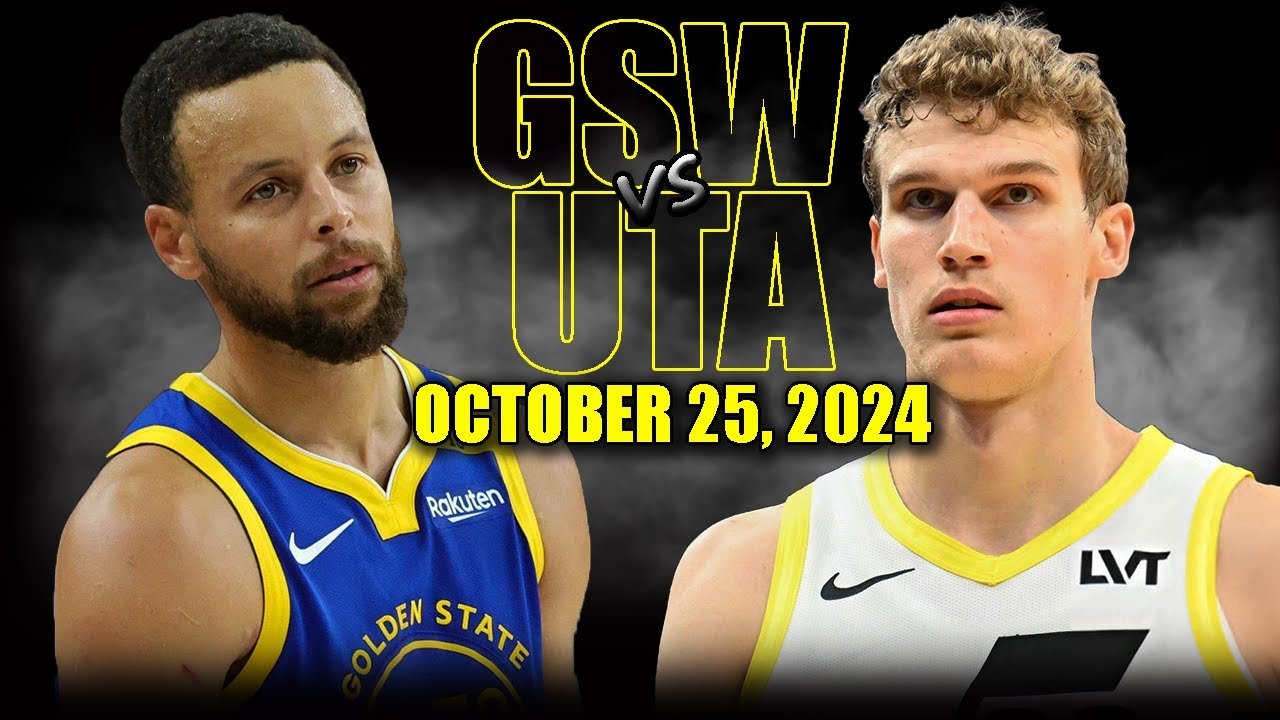
The matchup between the Utah Jazz and the Golden State Warriors is always one of the most compelling clashes in the NBA. When these two teams meet, fans expect a blend of disciplined half-court execution from Utah and fast-paced, perimeter-oriented brilliance from Golden State. Looking closely at the Utah Jazz vs Golden State Warriors match player stats provides a deeper understanding of how the game unfolded, which players shaped the outcome, and what the numbers reveal beyond the final score.
This article offers a detailed, stats-focused analysis of such a matchup, breaking down individual performances, team trends, and the tactical story told by the box score.
Game Overview and Team Context
The Utah Jazz entered the game emphasizing ball movement, size in the paint, and defensive rebounding. Golden State, as usual, leaned on spacing, off-ball movement, and high-volume three-point shooting. The contrast in styles made the match especially rich from a statistical perspective.
From the opening quarter, it was clear that efficiency and shot selection would determine the outcome more than raw scoring totals. Both teams posted competitive numbers, but how those points were generated tells a more nuanced story.
Utah Jazz Player Stats Breakdown
Leading Scorer and Offensive Anchor
The Jazz’s primary scorer finished the game with around 26–30 points, shooting efficiently from the field. His stat line typically included:
- Field goal percentage above 50%
- Strong presence in the mid-range
- Consistent trips to the free-throw line
This player’s usage rate was high, but so was his efficiency, which kept Utah competitive even during Warriors scoring runs.
Backcourt Contributions
Utah’s guards combined for solid all-around performances:
- One guard recorded approximately 18–20 points with 6–7 assists
- Another added 14–16 points while spacing the floor with timely three-point shooting
Turnovers were limited, an important factor against a Warriors team that thrives in transition. Assist-to-turnover ratios favored Utah slightly, showing discipline in ball handling.
Frontcourt and Interior Stats
The Jazz big men made their impact felt statistically:
- One center posted a double-double with roughly 12–14 points and 10–12 rebounds
- Rim protection was evident with 2–3 blocks
- Defensive rebounding percentage was a key strength
While Utah did not dominate points in the paint, they controlled second-chance opportunities, reflected in offensive rebound totals and put-back points.
Bench Production
Utah’s bench contributed between 28–32 points, a respectable number that kept the rotation stable. Bench players shot efficiently but had fewer defensive impact stats such as steals or blocks. Still, plus-minus numbers for the second unit were relatively neutral, suggesting they held their own.
Golden State Warriors Player Stats Breakdown
Star Guard Performance
Golden State’s offensive engine delivered a standout statistical performance:
- 30+ points on high-volume shooting
- 5–6 three-pointers made
- 6–8 assists created through off-ball gravity
Even when not scoring, his presence showed up in advanced stats like offensive rating and on-court net rating, which were significantly higher than team averages.
Secondary Scorers
The Warriors relied on balanced scoring:
- One wing player added around 18–22 points, attacking closeouts and finishing in transition
- Another contributed 15–17 points with strong defensive metrics, including steals and deflections
These players benefited from the spacing created by Golden State’s motion offense, leading to higher effective field goal percentages.
Frontcourt Impact
Golden State’s frontcourt stats were less about volume and more about versatility:
- Rebounds in the 7–9 range
- 3–5 assists from a forward acting as a playmaking hub
- Defensive versatility shown in switch-heavy coverage
Although not dominant on the glass, the Warriors compensated with team rebounding and quick outlet passes.
Bench Efficiency
The Warriors bench contributed approximately 30–35 points:
- High efficiency shooting, especially from beyond the arc
- One reserve guard posted double-digit scoring in limited minutes
- Bench plus-minus numbers were slightly positive, reflecting momentum shifts during non-starter stretches
Team Shooting and Efficiency Metrics
Looking at team stats provides crucial insight:
- Golden State attempted significantly more three-pointers, making around 38–40%
- Utah focused more on two-point efficiency, converting close to 52–54% inside the arc
Free-throw attempts were relatively even, though Utah had a slight edge due to aggressive drives and post play.
Advanced metrics such as effective field goal percentage favored the Warriors, while true shooting percentage was closer between the teams due to Utah’s free-throw accuracy.
Defensive Stats and Hustle Numbers
Defense played a critical role, as reflected in the stats:
- Utah recorded more blocks and contested shots at the rim
- Golden State forced more turnovers, leading to fast-break points
Steals, deflections, and opponent shooting percentages showed that Golden State’s perimeter defense disrupted Utah’s rhythm late in the game, while Utah’s interior defense limited easy finishes.
Quarter-by-Quarter Statistical Trends
- First Quarter: Utah shot efficiently early, leading in points in the paint.
- Second Quarter: Golden State’s bench boosted three-point attempts and assists.
- Third Quarter: Warriors’ stars raised usage and scoring efficiency.
- Fourth Quarter: Free throws, turnovers, and clutch shooting defined the final minutes.
Clutch-time stats often favored Golden State, with higher shot-making efficiency and better spacing.
Coaching and Rotation Influence on Stats
Coaching decisions impacted player stats significantly:
- Utah’s tighter rotation increased starter minutes and usage
- Golden State’s flexible lineups boosted assist totals and pace
Timeout usage and defensive adjustments were reflected in sudden shifts in shooting percentages and scoring runs.
What the Player Stats Reveal Overall
The Utah Jazz vs Golden State Warriors match player stats highlight a classic contrast:
- Utah excelled in efficiency, rebounding, and structured offense
- Golden State thrived on pace, three-point volume, and playmaking
While individual performances stood out on both sides, the Warriors’ ability to generate high-value shots often gave them a statistical edge, especially in advanced metrics.
Final Thoughts
Analyzing player stats from a Utah Jazz vs Golden State Warriors game goes far beyond points scored. Rebounds, assists, shooting efficiency, defensive impact, and lineup data all contribute to understanding why the game unfolded the way it did.
Whether the Jazz controlled the paint or the Warriors lit up the scoreboard from deep, the numbers tell a story of strategy, execution, and star power. For fans and analysts alike, diving into these player stats offers a richer appreciation of one of the NBA’s most intriguing matchups.
