
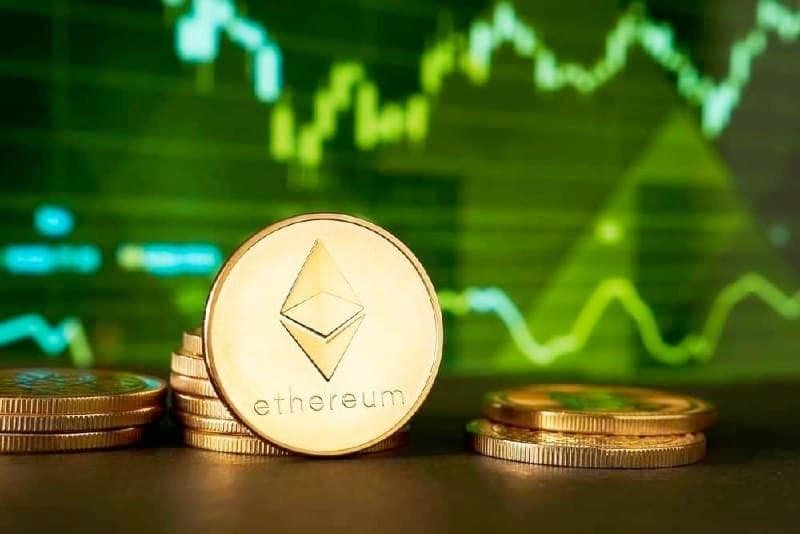
The price of Ethereum (ETH) has long been lauded for its dramatic rises — the promise of outsized returns entices investors. But that same volatility and structural fragility make Ethereum a dangerous asset for those unprepared for its swings. As of now, ETH trades at around $2,914.82, yet beneath that number lies a turbulent world of unpredictability, macroeconomic sensitivity, and systemic risk. In this article, we explore why Ethereum price is arguably one of the most dangerous in the crypto space.
The High-Wire Act: Volatility and Price Swings
Ethereum’s price is infamous for being wildly volatile. At certain times, the day-to-day moves aren’t minor — they can swing 10% or more in a single day.
In early 2025, for example, the “DVOL” index for ETH — a measure of expected volatility — exploded, with one-day at-the-money volatility jumping to as high as 184% from a prior 34%. That spike accompanied a dramatic crash, wiping out a third or more of ETH’s value in mere hours on some exchanges.
Such swings make ETH akin to a financial roller-coaster: for every sharp surge, there’s always the risk of an equally steep plunge. For investors without a strong stomach — or a diversified portfolio — losses can accumulate quickly.
Macro-economic Sensitivity: More Than Just Crypto — The Global Context Matters
Ethereum doesn’t move in a vacuum. Its price is deeply linked to broader macroeconomic conditions — interest rates, global liquidity, trade tensions, and investor sentiment across all risk assets.
For instance, when global yields rise or central banks tighten monetary policy, risk assets often get hammered, and crypto tends to follow. That means a routine economic shock somewhere in the world — from inflation spikes to changes in interest rates — can cascade into a massive ETH sell-off. These aren’t crypto-specific risks, but systemic ones.
This makes Ethereum not just a speculative instrument, but a levered bet on global macro conditions. For investors in more stable economies or with limited risk tolerance, that linkage can turn volatile crypto exposure into a dangerous gamble.
everage, Liquidations and Domino-Effect Sell-offs
One of the riskiest things about Ethereum is how leverage amplifies its volatility. Many traders use borrowed funds to bet on price moves, hoping to maximize gains. But when ETH price begins to tumble, that leverage turns against them — and rapidly.
Recent market data show that in a single 24-hour span, over $1.1 billion in leveraged long positions (across crypto) were wiped out, and ETH alone accounted for a large portion of those liquidations. As prices breach critical support levels, automated stop-losses and margin calls trigger — often in cascades — magnifying downward spirals.
These liquidation waves create self-fulfilling crashes: fear triggers selling, selling triggers more liquidations, and so on. Even strong hands or long-term believers can be caught in the crossfire, especially if trading on margin or holding leveraged positions.
Structural & Network Risks: Beyond Price — Technology & Competition
Ethereum’s value isn’t only about price charts; it’s also tied to its network, governance, and competition. As a leading smart-contract and decentralized application platform, ETH’s fundamentals are linked to the health of its ecosystem. That comes with serious technical and structural risks.
The shift to proof-of-stake and the introduction of staking derivatives have altered supply dynamics. On one hand, deflationary pressure under heavy network usage can be a plus. On the other hand, locked-up supply reduces liquidity, which can make price moves sharper during sell-offs.
Moreover, as newer blockchains and layer-1 alternatives emerge with competitive features — lower fees, faster transactions, simpler scaling — Ethereum’s dominance faces challenge. If network growth stalls or user activity migrates elsewhere, ETH’s long-term demand could weaken, dragging price down regardless of crypto-market mood.
In short: the risk isn’t just about swings in value, but about whether Ethereum can sustain its ecosystem relevance over time.
Ecosystem Fragility: DeFi, NFTs, and Systemic Risks
Ethereum serves as the backbone for much of decentralized finance (DeFi), NFT platforms, and smart-contract innovation. That gives it huge potential — but also compounds risk.
When ETH’s price crashes, many DeFi protocols see collateral values drop. That can trigger cascading liquidations, margin calls, or forced asset sales — destabilizing not just prices, but entire projects.
Furthermore, because protocols often rely on smart contracts and bridges, network vulnerabilities or hacks (e.g., at the bridge or protocol layer) can ripple through the ecosystem, damaging both trust and value.
Thus, an ETH price crash isn’t just about losses for holders — it can impair the very infrastructure that those holders counted on.
Emotional and Behavioral Risk: Fear, Greed — and Panic
Beyond technicalities, cryptocurrency markets — Ethereum included — are highly driven by psychology. When prices soar, optimism, FOMO, and speculation reign. But when ETH starts falling, fear spreads fast, often leading to panic sells.
Such behavioral swings amplify volatility. Fear-driven withdrawals or impulsive trades tend to override rational long-term thinking. Investors who entered on hype may exit on fear — frequently at a loss.
Moreover, the unpredictable nature of macro events, news cycles, and regulatory developments can rapidly shift sentiment. Because of this, even long-term holders may struggle to stick with ETH through turbulent stretches — especially if they aren’t emotionally prepared for steep drawdowns.
The Illusion of Utility Doesn’t Cancel Out Speculation
Proponents of Ethereum often highlight its utility: smart contracts, decentralized finance, NFTs, decentralized applications, and more. These real-world uses give ETH value beyond mere speculation.
But utility does not immunize Ethereum’s price from speculative swings. Even if the network remains technically sound and widely used, broad market sentiment — macroeconomic factors, global risk appetite, leverage dynamics — can drag ETH’s price down.
That means owning Ethereum is never just about believing in blockchain tech: it remains a bet on global liquidity, investor mood, and macro conditions — often far more volatile than any traditional asset or currency.
What Makes Ethereum Especially Dangerous (Compared to Traditional Investments)
| Risk Type | Why Ethereum Is Riskier Than Traditional Assets |
|---|---|
| Volatility | Large intraday swings (10%+), potential 20–30% crashes in days — far beyond typical stocks or bonds. |
| Macro Linkage | Price deeply tied to global liquidity, interest rates, geopolitical events — unpredictable forces outside crypto. |
| Leverage Effects | Use of margin amplifies gains and losses; liquidations can cascade fast, snowballing losses. |
| Ecosystem Dependencies | Price tied to success/stability of DeFi, smart-contracts, staking — technical flaws or competition can erode value. |
| Behavioral Risks | Emotional trading, fear/panic, herd behavior — investors may suffer heavy losses from reactive decisions. |
| Liquidity & Supply Constraints | Post-staking illiquidity, locked tokens can make recovery harder; large sells have outsized impact. |
In traditional investments — say a diversified stock portfolio or bonds — while risks exist, swings tend to be milder, and macro linkage is more predictable. With Ethereum, the entire structure is thinner, more leveraged, more reactive, and often less regulated.
That doesn’t necessarily make ETH a “bad” asset — but it makes it a dangerous one, especially for those treating it like a safe store of value or a stable investment.
For Whom Is Ethereum Price Especially Dangerous?
- Risk-averse investors: If you can’t tolerate large drawdowns, EMA’s wild swings will cause stress — possibly forcing you to sell at a loss.
- Investors using leverage or margin: The combination of ETH’s volatility + leverage is a recipe for disaster during downturns.
- Short-term speculators without exit plans: Without disciplined strategy or stop-loss, you may be wiped out by a sharp reversal.
- People investing “for stability”: If you seek stable returns — say like bonds or index funds — ETH is too erratic to serve that role.
- Those unaware of ecosystem risk: If you believe ETH’s utility guarantees stable long-term value, you might be blindsided by technical flaws, network competition, or DeFi protocol failures.
Is There Any Redemption? Can Ethereum Be of Value — Despite the Danger?
Yes — but only under certain conditions:
- Long-term horizon & strong conviction in crypto tech: If you believe in blockchain, decentralized finance, smart contracts, and think Ethereum’s ecosystem will mature — then volatility becomes part of the journey. Smart investors often “buy the dip,” viewing downturns as opportunities. Indeed, during some sharp drops, large investors (“whales”) quietly accumulated ETH, anticipating a rebound.
- Diversified portfolio and risk management: If ETH is only a portion of a broader, diversified investment plan (with bonds, stable assets, real estate, etc.), the risk of ETH gets balanced.
- Active awareness of macro conditions: Cryptocurrency investors who monitor broader economic indicators — interest rates, global liquidity, geopolitical events — may anticipate downturns and adjust accordingly.
- Tolerance for uncertainty and liquidity stress: Accepting that large drawdowns and illiquid periods are part of crypto’s nature, rather than a bug that must be avoided.
But — and this is critical — one must go in with eyes wide open. The promise of large gains must be weighed against real risk. Treating Ethereum like a stable asset, or a “digital gold,” without acknowledging its volatility and systemic fragility, can lead to serious financial pain.
Final Thoughts: Ethereum — A Double-Edged Sword
Ethereum stands out in the crypto world: technically sophisticated, ecosystem-rich, full of innovation and potential for disruption. But that same complexity, combined with high volatility and macro-sensitivity, makes ETH price a dangerous area for the unprepared.
For some, ETH will be a wild ride — potentially rewarding, but risky. For others, the same factors make it a perilous gamble.
If you choose to invest, do so with caution: treat ETH as a high-risk asset. Use only money you can afford to lose. Diversify. Be ready for sharp swings. And, above all, do not assume that utility or enthusiasm for blockchain will safeguard you against the unpredictable — because when markets shift, Ethereum can turn from gold rush to freefall in a heartbeat.
