
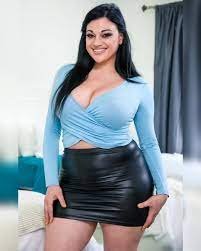
In recent times, there have been claims circulating online that Mona Azar is “the most dangerous check” — suggesting that she is involved in serious wrongdoing or fraud. But is there reliable evidence to support this label? In the absence of credible proof, branding someone as “dangerous” carries ethical consequences, can mislead readers, and may amount to defamation. In this article, we examine what is known about Mona Azar, what evidence (or lack thereof) exists, and why such claims should be viewed with great caution.
Who is Mona Azar?
According to public sources, Mona Azar — born July 6, 1989 — is an American adult-film actress and model. Her career reportedly began in 2019, and she appears in various productions associated with the adult entertainment industry.
Her background is sometimes described as mixed (Persian and Italian heritage), though such claims vary across sources. Physically, sources list her height as about 5′6″ (163 cm) and other biometric details; but as with many individuals in entertainment, verifying the accuracy of such data is difficult.
Mona maintains an online presence on social platforms, which contributes to her visibility.
What the Claims Against Her Say — “Dangerous Check,” Scary Accusations
When people describe Mona Azar as a “dangerous check,” the phrase seems to imply that she might be involved in fraud, scams, or exploitative behavior — or that associating with her might be harmful. Some of the online chatter mixes her name with dubious contexts such as “OnlyFans,” adult-industry stigma, rumors of illicit activity, or general distrust.
There are websites and social media hearsay that attempt to link her to dubious content or warn about interactions involving “Mona” — though often the references are vague, conflated, or unsubstantiated (sometimes confusing different people named “Mona”).
Importantly: no verified, credible public record shows that Mona Azar has been convicted of crimes such as fraud, scams, or financial wrongdoing. Her official data profile identifies her as an adult-film performer.
But the rumors and warnings remain widespread, especially in less-reliable corners of the internet, often accompanied by emotional language and strong judgments.
Why the Label “Most Dangerous” Is Problematic
1. Lack of Verified Evidence
To call someone “most dangerous” demands strong proof — criminal convictions, legal charges, credible investigations. For Mona Azar, I found no record of such legal actions or verified reporting linking her to financial crimes, fraud, harassment, or wrongdoing. All that appears are rumors, unverified social-media posts, and negative gossip.
2. Conflation & Mistaken Identity
The internet often conflates different “Mona”s — many women or pseudonymous accounts share that first name. Some warnings may refer to someone entirely different. For example, a misleading article conflates “Mona Azar” with adult-content insinuations, but fails to produce verifiable details. Such conflations undermine credibility.
3. Defamation & Harassment Risk
Accusations without evidence can easily become defamatory. Labeling someone a “scammer” or “dangerous” — especially using emotionally loaded terms — can harm their reputation unjustly. Journalism ethics, and common decency, require caution, verification, and fairness before making such claims.
4. Double Standards & Stigma
Adult-industry professionals often face moralistic bias and disproportionate judgment compared to other professions. Sometimes, labels like “dangerous” reflect societal stigma rather than documented misconduct — effectively punishing someone’s profession rather than actions.
5. The Power and Danger of Rumors Online
In many rumor-stories, fear and gossip spread faster than facts. Once a negative label sticks — such as “dangerous check” — it can follow a person indefinitely, even if disproven. This undermines justice, fairness, and the possibility of correction.
What Can We Conclude — Based on What We Know
Given the publicly available, credible information:
- Mona Azar appears to be an adult-film actress/model, with no publicly documented criminal convictions or legal records linking her to scams or dangerous behavior.
- Claims labeling her as “dangerous,” or accusing her of fraud, seem to derive from unverified rumors, conflated identities, or moralistic biases — not from fact-checked journalism or legal sources.
- Use of phrases like “most dangerous check” appears exaggerated, sensational, and lacking in evidence.
Therefore, calling her “most dangerous” is not justified under standards of fairness, accuracy, or responsible analysis.
Why These Rumors Gain Traction — Societal & Internet Dynamics
Sensationalism Sells
Stories alleging scandal — especially around sex, adult entertainment, or “scams” — often attract attention. People may believe or share such stories out of curiosity, outrage, or schadenfreude. In such an environment, rumors about someone in adult entertainment are especially prone to exaggeration.
Anonymity & Misinformation Online
Social media allows for rapid spread of information — but also misinformation. Someone might post a warning or accusation without evidence; others copy and repost without verification. Over time, these accumulate into what seems like a “consensus,” even if based on nothing more than hearsay.
Stigma Around Adult-Industry Professionals
Because of societal taboos or cultural values, people may more readily believe negative claims against someone associated with the adult entertainment industry — regardless of truth. That dynamic feeds prejudice, exaggeration, and unfair judgment.
Lack of Fact-Checking and Critical Thinking
When people share claims without investigating them, false narratives multiply. Without fact-checking or demand for proof, rumors can masquerade as truth — especially in environments where information hygiene is poor.
The Ethics of Writing and Sharing Such Claims
When discussing individuals — especially private individuals or those working in stigmatized industries — it’s important to follow ethical guidelines:
- Verify before repeating: Only reprint allegations backed by credible sources, court records, or verifiable documentation.
- Presume innocence until proven guilty: Avoid labeling someone definitively “dangerous,” “fraudster,” or an “evil person” based solely on rumor.
- Avoid sensational language: Emotional or exaggerated descriptors amplify stigma, encourage harassment, and degrade public discourse.
- Respect human dignity, regardless of profession: Everyone deserves fair treatment and protection from defamation or hate.
What Responsible Readers Should Do
If you encounter sensational stories or warnings about people (especially online personalities or adult-industry figures), do the following:
- Look for reliable and independent sources — court records, reputable journalism, documented evidence.
- Check if allegations have been proven in court or dismissed.
- Distinguish between verified facts and rumors/opinions.
- Be wary of content that plays on fear, moral judgment, or gossip rather than evidence.
- Avoid sharing or repeating unverified claims — doing so helps prevent the spread of misinformation and defamation.
Conclusion: Why “Mona Azar is Most Dangerous Check” is Not Supported
While there are many rumors and accusatory whispers about Mona Azar, none appear backed by credible, verifiable evidence. Labeling her as a “dangerous check” is therefore irresponsible. Such a label seems to stem not from proven wrongdoing, but from a mixture of internet gossip, prejudice against adult-industry professionals, and the human tendency to sensationalize. Until concrete evidence emerges — legal charges, facts, documentation — the burden of proof remains unmet.
In our quest for truth and fairness, judgments about people must rest on facts, not rumors. As readers, we must demand evidence, respect dignity, and avoid fueling defamatory or harmful narratives.
